University of South Alabama Mobile
Mobile Made the Right Call Letting Uber Operate Within City Limits
After a unanimous City Council vote authorized Uber to operate in Mobile, the ride-hailing service stands to offer residents a safer, more reliable alternative to the city’s long-troubled taxi system.
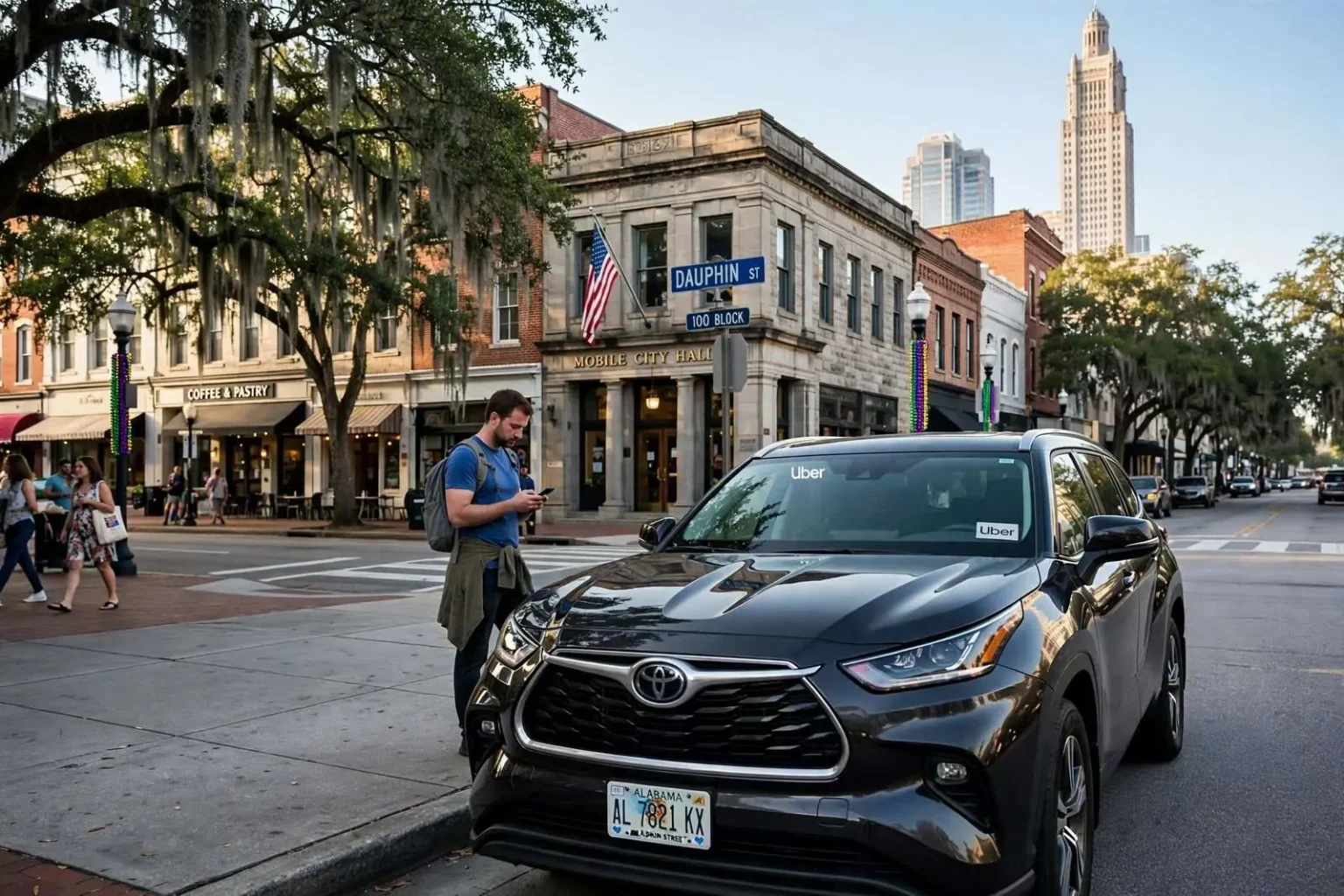
Mobile’s decision to let Uber operate legally within city limits was the right call, and it is one that should have come even sooner. Last month, the Mobile City Council voted unanimously to authorize the ride-hailing company to pick up and drop off passengers inside the city, ending months of uncertainty for drivers and riders who had been navigating a legal gray area.
A vote that did not come without resistance
The vote did not come without resistance. At least one council member raised concerns on the dais about passenger safety and the reliability of contract drivers who are not held to the same licensing standards as traditional taxi operators. Those are fair questions to ask of any new industry moving into a city. But anyone who has actually had to rely on Mobile’s taxi service over the years knows the bar was not exactly high to clear.
Uber’s arrival in the mainstream American market has followed a familiar pattern in city after city: a company builds a following among riders frustrated with the status quo, local governments push back to protect entrenched taxi interests, and eventually most of those governments come around once it becomes clear the public wants the option. Mobile followed that same arc, just a little behind some of its peer cities.
The company’s ambitions were evident years before it reached Mobile. Uber’s model started as a black-car service, offering rides in Lincoln Town Cars and SUVs at a premium price point well above a standard taxi fare. What it lacked in affordability early on, it made up for in reliability, arriving on time and doing away with the guesswork that has long plagued cab service in many American cities, Mobile included.
Turning that promise into a citywide service required clearing the same bureaucratic hurdles Uber has faced in city halls across the country, where taxi companies and their allies on local councils have often been reluctant to open the door to competition. Mobile’s council debate over the summer echoed disputes that played out earlier in Washington, D.C., and dozens of other cities before local officials ultimately concluded they could not hold back rider demand for long.
The practical case for riders
For residents of Mobile, the practical case for Uber is straightforward. The city’s airport sits roughly 13 miles from downtown, meaning a round trip to the Battle House Hotel and back can run close to $100 by taxi. Riders have long complained of drivers taking longer, more expensive routes, cabs that take over an hour to arrive, and other frustrations that have made hailing a ride in Mobile feel more like a gamble than a service.
That frustration has been particularly acute for the thousands of travelers who move through the city each year for conventions, Mardi Gras, cruises out of the Alabama Cruise Terminal and events downtown, where the walkable district around Government, Dauphin and Royal streets still leaves sizable gaps in transportation between hotels, restaurants and the far side of the city.
Safety, students and drunk driving
The safety argument cuts in Uber’s favor as well. Students at the University of South Alabama have for years faced the challenge of getting from the bars on Dauphin Street back to campus safely late at night. More than a decade ago, the university explored using student fees to fund a voucher-based transportation system for exactly that purpose, but the effort was eventually scrapped after running into abuse of the program. A reliable ride-hailing option fills much of that gap without requiring a university subsidy.
Research on ride-hailing’s public safety impact has generally found that cities allowing services like Uber to operate see measurable reductions in drunk driving arrests, as riders who might otherwise have gotten behind the wheel instead have an easy, inexpensive alternative readily available on their phones. That alone is a meaningful public benefit for a city the size of Mobile.
None of this means Uber is a perfect substitute for a stronger public transit system, or that the concerns raised by council members about oversight and driver accountability should be dismissed outright.
A tool, not a threat
But rather than treating ride-hailing companies as a threat to be managed or restricted, city leaders would do well to think of them as a tool that can be used to make Mobile more attractive to visitors, residents and the business community alike, much the same way local governments have long used tax incentives to lure manufacturers and other employers to the region.
Mobile’s decision to allow Uber to operate is not likely to move the needle much on its own for the city’s broader economy. But it costs the city very little to permit, and it stands to make daily life easier for the residents, students and visitors who depend on getting around a city that has never quite solved its transportation problem on its own.
The comparison with peer cities only strengthens the point. In Atlanta, Nashville and New Orleans, ride-hailing became part of the basic transportation fabric within a couple of years of legalization, and cities that stalled did so at the cost of visitor frustration and negative word of mouth. Mobile, which invests heavily in courting tourism dollars from its beaches to its historic districts, gains a low-cost amenity simply by letting a service residents already want operate in the open.
There is also a matter of fairness to the drivers already working in the gray area. Legalization lets them operate without looking over their shoulders, purchase proper commercial insurance, and treat rideshare work as a legitimate part-time or full-time job rather than a legal risk. For a city working to grow its downtown population and its small business base, that kind of flexible work option is worth keeping inside the law rather than pushing it to the margins.
The council’s unanimous vote, in the end, was less an endorsement of any one company than an acknowledgment of how people now move around cities. As Mobile grows its waterfront attractions, its festival calendar and its convention business, the city will benefit from a transportation menu that includes options beyond the traditional cab. On that score, the council made the right call, and residents will be the ones who notice the difference first.
What happens next in Mobile is largely up to how the service is administered. Cities that have handled ride-hailing well have done three things: they have clarified insurance requirements so that liability coverage is unambiguous from the moment a driver accepts a fare, they have set clear background-check standards, and they have avoided layering on per-trip taxes heavy enough to push drivers back into the shadows.
Mobile has an opportunity to get all three right the first time. A sensible local framework would mirror the state-level rules most southern cities have adopted rather than inventing a stricter second layer, and it would keep reporting requirements light enough that compliance does not become a burden on individual drivers.
The taxi industry, for its part, will not disappear. Traditional operators still serve airport queues, corporate accounts and riders without smartphones. But the firms that survive nationally have done so by adopting the same technology consumers expect — advance booking, fare estimates, driver tracking — rather than by leaning on regulatory protection.
Mobile’s cab operators now face the same choice, and the city’s consumers will be better served whichever way the competition goes. Competition, in fact, was the underlying point of the debate. The council could have kept the legal gray area in place indefinitely, leaving riders to guess which trips were lawful and drivers exposed to enforcement.
Instead it chose to bring a fast-growing industry into the open, where it can be taxed, insured and held to standards like any other business. That is the outcome cities almost always reach eventually, and Mobile reached it without years of litigation or a special-session fight. For a council often divided on growth issues, the unanimity itself was a signal: this was not a controversial decision once the arguments were laid out.
The remaining question is whether city leaders build on the vote. A city that accepts ride-hailing while leaving transit funding stagnant has solved only the convenience problem, not the access problem. Workers in Prichard, Chickasaw and Saraland who commute into downtown Mobile, and residents in West Mobile who lack late-night options, still need reliable public transportation.
Ride-hailing can be a complement to that system — feeding first-and-last-mile trips to bus lines, absorbing late-night demand and filling gaps on weekends — but it cannot replace fixed-route service for the households that depend on it most.
If the council pairs its new open-door policy on ride-hailing with a serious look at regional transit coordination, the Uber vote will be remembered as a turning point rather than a one-off accommodation. Either way, the immediate result is straightforward: riders can now summon a ride in Mobile without wondering whether the trip is legal, and drivers can earn a living without fear.
That certainty, modest as it sounds, is exactly the kind of everyday improvement local government is supposed to deliver. On this one, the city got it right — and got it right, at last, on the unanimous side of a vote.