State Sets Two Public Hearings on Mobile River Bridge and Bayway Plan
State transportation officials scheduled two public hearings for residents to weigh in on the proposed Mobile River Bridge and Bayway widening project.
MOBILE, Alabama — Residents will get two chances this fall to speak directly to state transportation officials about the long-discussed plan to build a new Mobile River Bridge and widen the Bayway, as the project’s draft environmental review moves toward public comment.
The hearings mark the point in a major infrastructure project where the paper process becomes a public one. A draft environmental impact statement is the document that describes, in formal detail, what a project would build, where, and what it would do to the traffic, neighborhoods, wetlands, and waterways around it — and the public comment that follows is not ceremonial. Comments received during the review window become part of the project record and can shape the final design, the mitigation commitments, and the alignment choices that carry through to construction.
Two Hearings, Two Locations
The first public hearing is set for Tuesday, Sept. 23, at the Alabama Cruise Terminal downtown. An exhibit area featuring maps, renderings and other visual displays will be open from 4 to 8 p.m., giving residents a chance to talk one-on-one with the engineers working on the draft environmental impact statement. A short presentation is scheduled for 5:30 p.m., followed by a public forum where anyone wishing to speak can sign up at the entrance and will be given two minutes at the microphone.
The format is deliberate. The open-house stretch before the presentation exists for the questions that don’t fit a public forum: a resident who lives on a street the project touches, a business owner tracking construction access, a commuter who wants the routing explained by the person who drew it. The evening forum then puts the broad positions on the record — support, opposition, and the specific demands that comment periods exist to collect.
A second hearing, covering the same material, will be held the following Monday, Sept. 29, at the Five Rivers Delta Resource Center, also running from 4 to 8 p.m.
The split between the two venues carries its own logic. The cruise terminal downtown serves the neighborhoods and commuters closest to the river crossing — the part of the project inside the city’s urban core — while the Delta Resource Center, off the Causeway on the edge of the Mobile-Tensaw Delta, sits in the landscape the Bayway portion of the project touches and is reachable for Baldwin County residents who cross the bay daily and would live with the widened span’s effects.
Residents who prefer not to speak publicly can instead fill out comment forms at either event, or submit comments online once the project’s public comment portal opens. Written comments must reach the Alabama Department of Transportation’s Mobile Area Office by 5 p.m. on Friday, Nov. 7, giving residents roughly six weeks after the first hearing to weigh in on the proposal.
That window matters more than its paperwork suggests. Federal environmental review counts written comments as formally as spoken ones, and organized comment campaigns — from neighborhood associations, environmental groups, business organizations, or simply households affected by a right-of-way — have moved real elements of project design before. The six-week runway also allows time for a considered submission rather than a two-minute statement composed on the drive to the microphone.
The Project Behind the Hearings
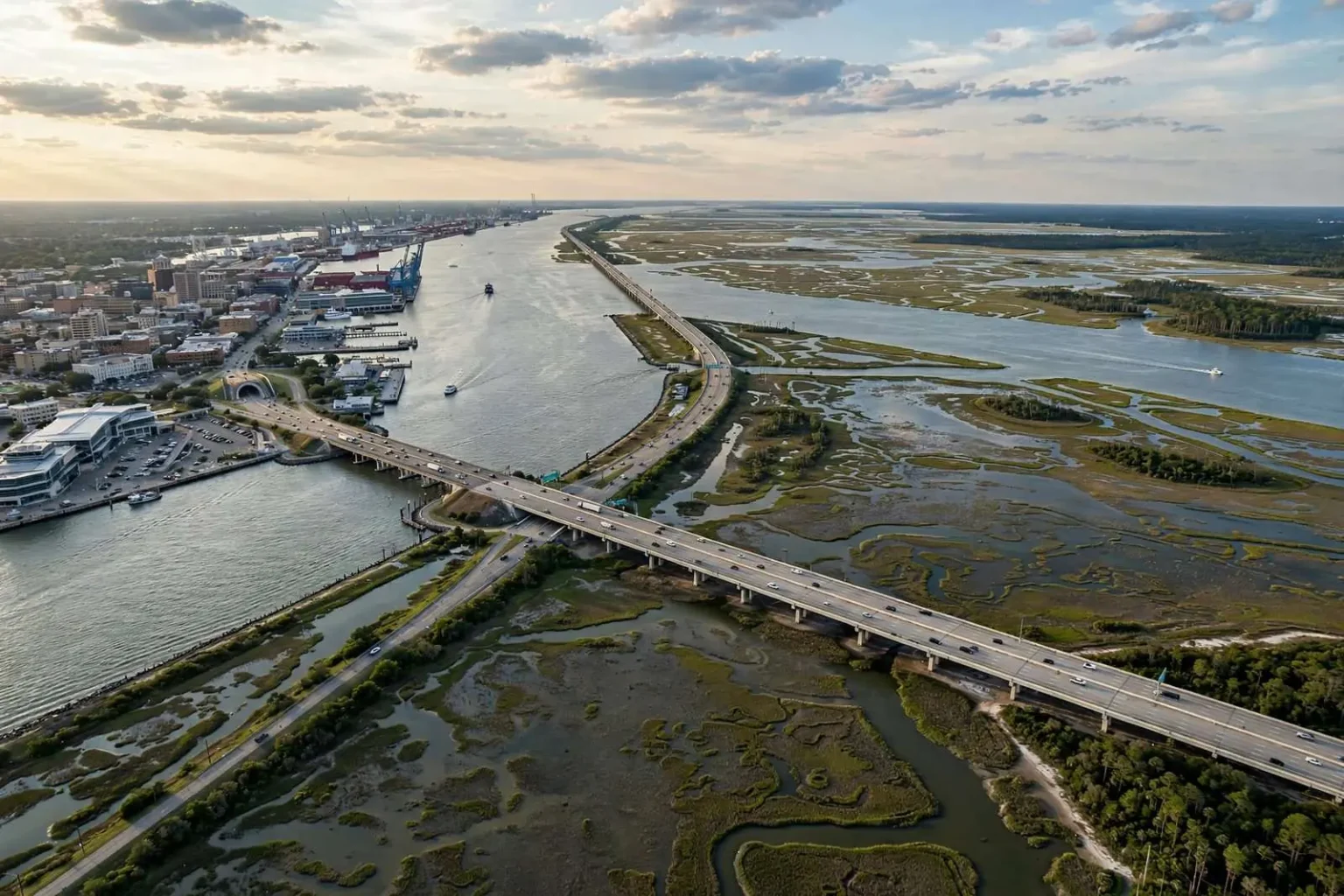
The plan under review is one of the most consequential public works proposals the region has seen in decades: a new bridge across the Mobile River connecting to an upgrade and widening of the Bayway, the long elevated span that carries the area’s main interstate crossing across Mobile Bay. The proposal has been debated locally for years as a way to ease chronic congestion on the existing bridge and Bayway.
Anyone who has driven the existing crossing understands the problem it is meant to solve. The current route funnels interstate traffic through a tunnel under the river and onto an aging elevated structure across the bay — a configuration designed for traffic volumes the region has long since outgrown, where a stall, a wreck, or routine maintenance closes the region’s principal east-west artery for hours. The tunnel bottleneck operates below modern interstate standards, and its capacity shapes rush hour on both sides of the bay, every weekday.
A new river crossing with a widened Bayway would, in the draft plan’s terms, add capacity in the corridor, separate local and through traffic, and bring the crossing up to current design standards. It would also — as residents’ comments will record — bring construction impacts, a changed skyline at the river, effects on the communities and waterways along the route, and the cost and financing questions that have attended every iteration of the proposal locally. Those are precisely the issues a draft environmental impact statement exists to put in front of the public before decisions harden.
Transportation officials say the two hearings represent a key step in shaping the eventual design of the Mobile River Bridge project. In practice, that means the record built this fall follows the project forward: comments inform the final environmental document, the final document informs the design, and the decisions made after this comment window are the ones that survive into construction documents and, eventually, into the skyline over the river.
Part of a Bigger Regional Roadwork Picture
The bridge hearings come as several other Mobile-area road projects continue to reshape traffic patterns around the city.
Work on the Interstate 10 ramp to Battleship Parkway, closed since a July tanker crash, was set to begin the same week as the first bridge hearing and is expected to take about two months. The closure has already rerouted traffic between the interstate and the Causeway corridor, and its repair schedule overlapping the hearings gives drivers a preview of the construction-era traffic the bridge project itself would bring at far larger scale.
Satchel Paige Drive remains closed between Government Street and Bolling Brothers Boulevard as crews widen it to four lanes as part of the McGowin Park shopping center development, and the Three Notch Road roundabout project continues on its own two-month timeline. Both projects sit in the city’s western growth corridor, where commercial development has outpaced the street network and each improvement narrows, for a season, the routes that carried the growth.
Resurfacing on State Route 163 and on Alabama 181 in Baldwin County have both wrapped up, while resurfacing on U.S. 90 between Halls Mill and Pine Hill Drive got underway this week with nighttime lane closures expected through December. The resurfacing work is the routine maintenance half of the region’s road picture — unglamorous, seasonal, and unnoticed until the lane closures make it visible — but it arrives in the same corridor the bridge project would someday transform, which is part of why transportation officials present the area’s work as a continuing program rather than a single project.
The Baldwin Beach Express connector to County Road 68 is more than 90 percent finished, and the Little Lagoon Pass bridge replacement remains roughly halfway complete. Both are Baldwin County projects with their own long histories — the express connector extending the highway network that serves the county’s fast-growing interior, and the pass bridge replacing an aging span on the coast — and their progress marks the two-county reality of the region’s transportation system: Mobile’s projects and Baldwin’s projects are, in practice, one commute.
That interdependence is the quiet backdrop to the bridge hearings. The thousands of drivers who cross the bay daily in both directions do so on a system whose parts are being repaired, widened, and replaced simultaneously, and the proposal under review this fall is the system’s largest remaining bottleneck. Officials presenting the two hearings have framed them accordingly — not as a single decision about a single bridge, but as the public’s chance to shape the piece of the regional network that every other piece depends on.
How to Weigh In
For residents planning to participate, the mechanics are simple: attend either hearing between 4 and 8 p.m. — Sept. 23 at the Alabama Cruise Terminal downtown or Sept. 29 at the Five Rivers Delta Resource Center — review the exhibits, question the engineers, and either sign up for two minutes at the microphone or leave written comment. Written comments can be submitted online through the project’s public portal, or mailed or delivered to ALDOT’s Mobile Area Office, where they must arrive by 5 p.m. Friday, Nov. 7.
The region has debated a new river crossing for years; the difference this fall is that the debate now has a document, a deadline, and two rooms where the engineers who drew the plans will answer for them. Whether the project moves ahead as proposed, modified, or not at all, the public record built in those two rooms — and in the six weeks of written comment that follow — will be part of what decides it.