Mobile Council Approves Hank Aaron Stadium Sound System Upgrade Amid BayBears Rent Dispute
Mobile's City Council approved a $22,090 sound system contract for Hank Aaron Stadium despite a dispute over unpaid rent owed by the BayBears.
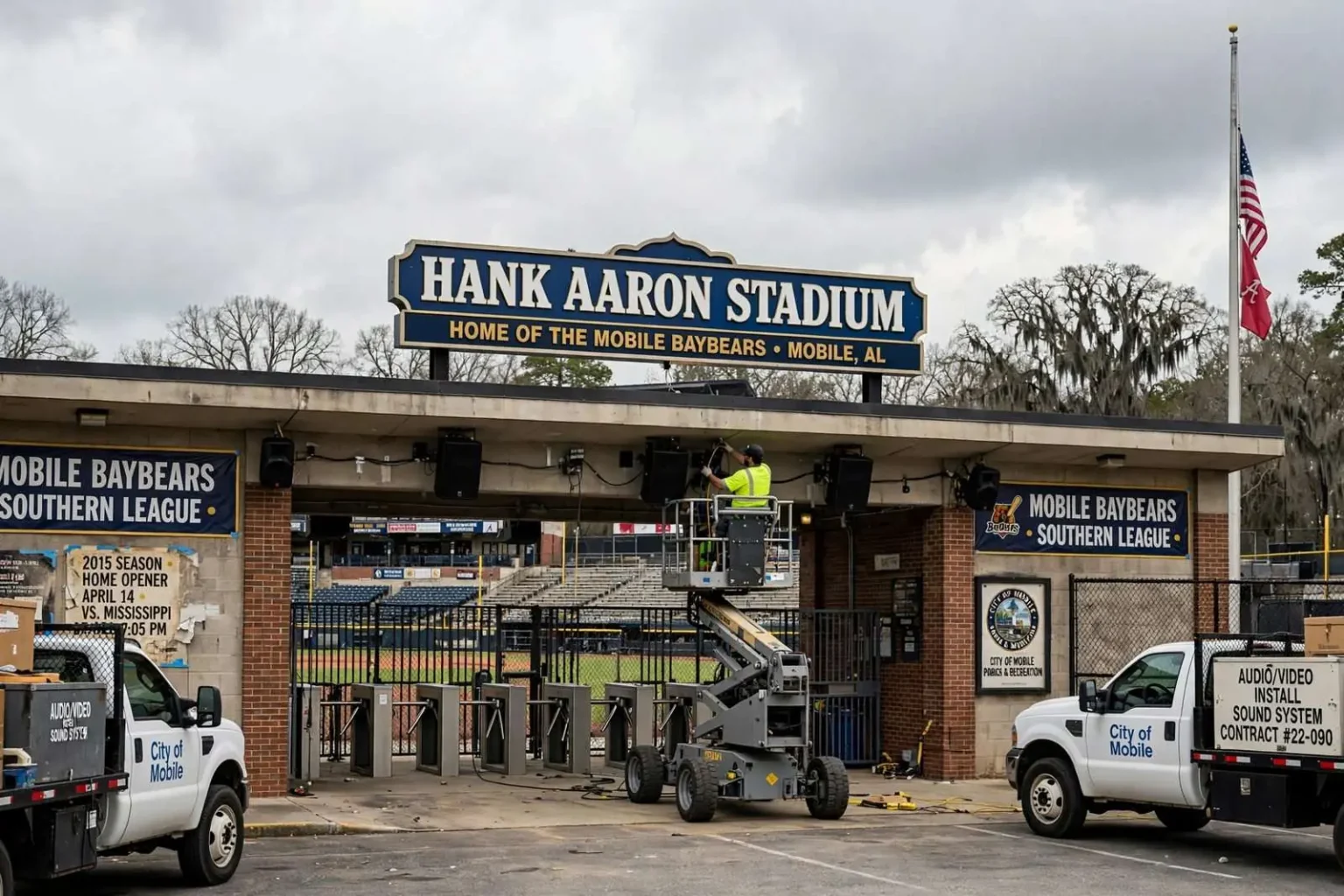
The Mobile City Council voted 5-2 this week to approve a $22,090 contract for a new sound system at Hank Aaron Stadium, moving forward with the upgrade even as tension simmers over unpaid rent owed to the city by the ballpark’s primary tenant, the Mobile BayBears. Council members District 6’s Bess Rich and Council President Gina Gregory cast the dissenting votes, with Rich pointedly questioning why the city should keep investing in the stadium while the Minor League Baseball club has not made payments on back rent. A representative from Mayor Sandy Stimpson’s office, appearing before the council, acknowledged the team “has not, and refuses to” pay what it owes.
The vote put the council in an uncomfortable position that cities with professional sports tenants know well: the team is in breach of its financial obligations, but the stadium it plays in belongs to the public, and letting the facility decay to make a point would punish the community more than the ballclub. The sound system contract, modest by stadium standards, became the test case for how the city would thread that needle — maintaining the asset while refusing to let the lease dispute slide.
A Lease Both Sides Have Breached
City officials said conversations are ongoing with BayBears management, but the administration has decided against amending the team’s lease until the club meets its existing obligations, which run through 2022. In the meantime, the city says it intends to uphold its own responsibilities under the agreement, including keeping the stadium in playable condition ahead of the 2015 season opener in mid-April. The Stimpson administration’s stance is a studied one: no renegotiation, no escalation, and no abandonment of the city’s side of the contract while the dispute continues.
City representatives told council members that because both sides currently have obligations outstanding under the lease, the agreement is effectively unenforceable at the moment — leaving the city focused on making sure its own maintenance commitments are met regardless of the rent dispute. “We’re caught in a predicament, to be honest,” one city official told the council, describing the standoff with team ownership as “a very intense situation.” The acknowledgment was unusually frank for a public meeting: with each side holding claims against the other, neither can simply sue to compel performance, and the practical remedy becomes negotiation conducted in the shadow of the season schedule.
That dynamic explains why a $22,090 sound system drew a floor debate. Every dollar spent on the stadium while rent goes unpaid is, to the dissenters, a dollar that rewards non-payment; to the majority, it is the price of keeping a public facility open and usable, whatever the tenant does. The split laid bare a question the council will face repeatedly as long as the lease runs: where the line falls between responsible stewardship and subsidizing a partner in default.
Where the Money Comes From
The sound system contract, awarded to a Mobile-based integration firm, is part of a broader package of stadium repairs funded through a reallocation of roughly $465,000 originally set aside in a capital improvements account tied to the completion of McCants Park on the city’s west side. Stimpson asked the council in January to redirect that surplus into a dedicated Hank Aaron Stadium fund covering lighting, sound and field rail padding ahead of opening day. The reallocation matters for how the debate lands: the money is not new spending from the general fund, but a surplus from a finished west-side park project repurposed for another public recreation asset.
Lighting upgrades were already approved in a separate contract earlier this year, and city officials say a field rail padding request is expected to come before the council within weeks. Together the three items form a pre-season checklist aimed at the things a ballpark must have working on opening day: lights that meet league standards, an audible public address and sound system, and safety padding along the field rails. None of it addresses the rent. All of it addresses the city’s own obligations under the lease — the commitments the city cannot legally walk away from, no matter how the dispute with the team resolves.
The sequence also reflects how stadium maintenance actually gets scheduled. Contracts for lighting, sound and safety equipment must be awarded, fabricated and installed on a calendar that ends at the first pitch, so the city cannot hold the work hostage to the rent talks without risking a facility that fails inspection when the season starts. The administration’s choice to keep the improvements moving on their own track, while the lease issue waits on the team, separates the two questions — and makes plain that the city regards the upkeep of its own property as non-negotiable either way.
For council members weighing the votes, the funding source also changed the optics of dissent. Opposing the contract did not redirect $22,090 to anything else — the McCants Park surplus had already been earmarked for the stadium fund — so a no vote functioned mostly as a statement of protest rather than a competing budget priority. Rich and Gregory made theirs anyway, on the argument that the statement itself was worth casting while the team refuses to pay what it owes.
Bigger Plans for 2016
Longer-term plans call for additional work in 2016, including resurfacing the playing field, addressing drainage problems, and eventually repurposing the current turf for use in a city park open to youth sports leagues and general public recreation. Those plans show the administration thinking beyond the next home stand. A playing surface with drainage problems is a competitive liability for a professional club and a scheduling headache for everyone else who uses the park, and resurfacing it is the kind of investment that either extends the stadium’s useful life or sets up an orderly transition if the ballclub’s future in Mobile changes.
The idea of repurposing the current turf is the most telling detail. Rather than discarding the material when the field is redone, the city would move it to a public park where youth leagues and casual players would get use out of it — a reminder that the stadium’s assets belong, ultimately, to the community that owns the building. It also hints at the direction the administration is already looking: a ballpark whose value to Mobile is measured not only in Box scores but in the kids who play on its grass, wherever that grass ends up.
A Stadium That Serves More Than Baseball
Despite the friction over the lease, several council members voiced support for moving ahead with the improvements, arguing the stadium serves the broader Mobile community beyond just BayBears games — hosting other events and drawing visitors to the historic ballpark. Supporters of the funding said the upgrades would improve the experience for everyone who attends events at the facility, regardless of how the rent dispute with the team is ultimately resolved.
That argument reflects how the stadium actually functions in the city’s calendar. A minor league park is a concert venue, a community gathering spot and a special-events host in addition to being a baseball stadium, and its condition shapes Mobile’s image with every visiting family and tour group that walks through the gates. The BayBears bring the Southern League schedule that fills the seats from April through the summer, but the building is a year-round public asset with a full-time price tag attached.
Hank Aaron Stadium, named for the Mobile-born baseball legend, has served as a fixture of the city’s sports and entertainment scene for decades. The name is a point of civic pride: Aaron grew up in Mobile, and the ballpark on the city’s west side carries his legacy into every season, a daily reminder that the town produced one of the greatest players the game has ever known. That heritage gives the stadium a claim on public investment that goes beyond the box office — it is a monument as well as a venue.
The council’s decision underscores the city’s effort to balance stewardship of a beloved public asset with growing frustration over the ballclub’s financial standing. The sound system will be installed, the lights are already contracted, and the rail padding request is on the way — all before the BayBears pay a dollar of the rent at issue. What the council has bought, in effect, is time: a stadium in playable, presentable condition for opening day in mid-April, while the lease standoff gets worked out between an administration that refuses to renegotiate and a tenant that refuses to pay. Mobile owns the ballpark either way, and the vote made clear that the city intends to keep it that way — open, working and worth the name on its sign.