Two Overnight House Fires Keep Mobile Firefighters Busy
Mobile Fire-Rescue crews battled two separate overnight structure fires, one caused by a water heater, with no injuries reported at either scene.
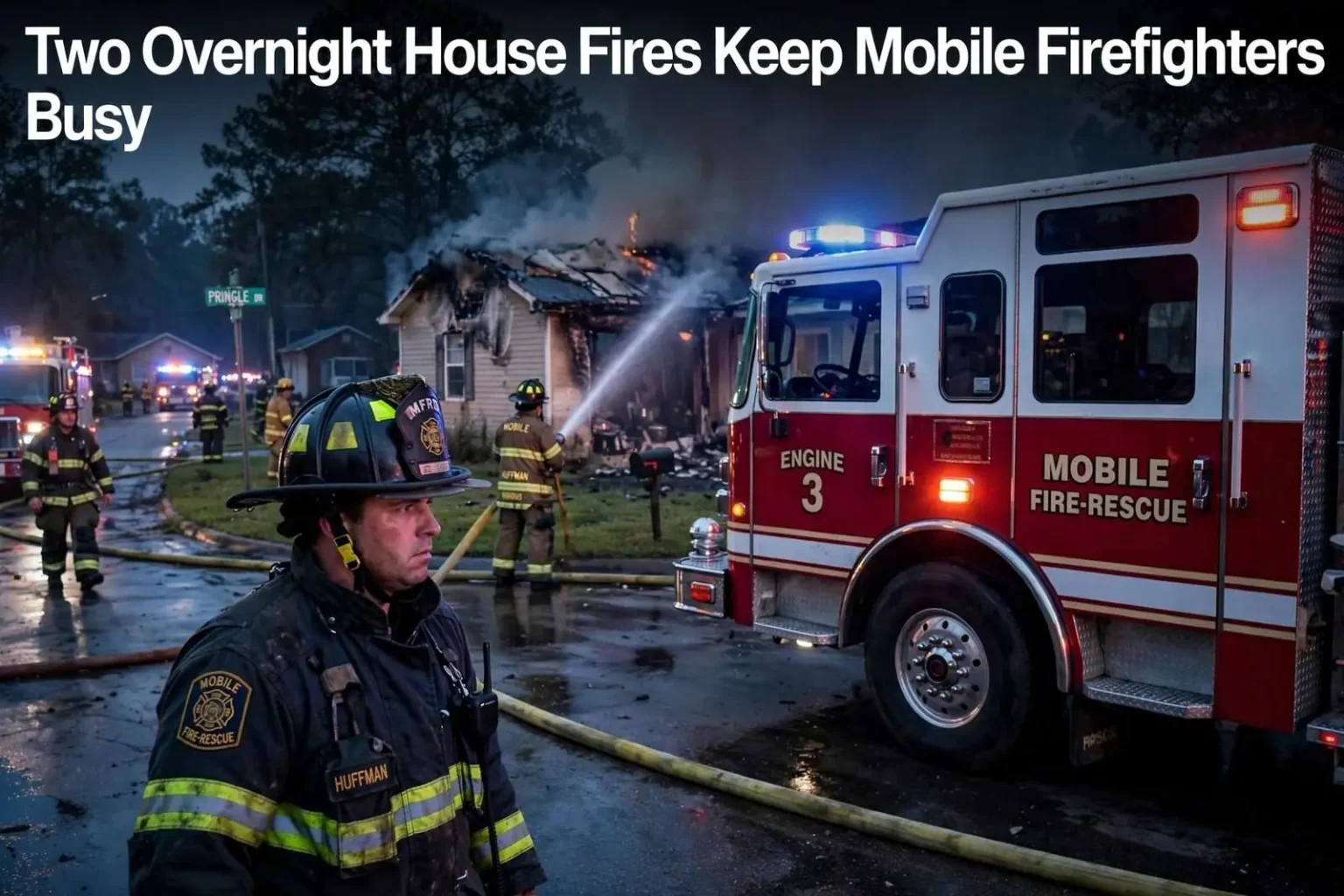
Mobile Fire-Rescue Department crews responded to two separate house fires within the span of about an hour in the predawn hours Thursday, though officials reported no injuries at either scene. The back-to-back calls kept firefighters moving across the city overnight and left one home damaged and another destroyed.
The first call came in around 2:30 a.m. for a reported house fire in the 4000 block of Pringle Drive. Firefighters arriving on scene found smoke coming from the roof of the home and quickly located the source of the blaze in the kitchen area. Crews were able to extinguish the fire before it spread further through the structure, according to MFRD spokesman Steve Huffman. Investigators later determined the fire was caused by a malfunctioning water heater, and estimated damage to the home at approximately $10,000.
Because the flames were knocked down quickly and confined largely to the area where the water heater malfunction originated, the rest of the Pringle Drive structure remained largely intact. The residents who lived there avoided injury, and the contained damage meant the family did not face the kind of total loss that leaves households scrambling for shelter, clothing and basic necessities in the middle of the night.
A second fire an hour later
About an hour later, a second crew was dispatched to a fire in the 2000 block of Stockton Drive, where a small, unoccupied house had caught fire. Unlike the Pringle Drive blaze, this structure was a total loss by the time firefighters brought the flames under control. Huffman said fire investigators continued working to determine the cause of that fire in the hours following the incident.
Because the Stockton Drive house was unoccupied at the time of the fire, no residents were displaced as a result of that blaze, though the structure itself was destroyed. Vacant and unoccupied buildings present a particular challenge for fire crews: with no one inside to call 911 early, fires in empty homes often burn longer before being reported, giving flames time to spread through walls and attic spaces before the first engine arrives. That was evident on Stockton Drive, where the response ended in salvage and overhaul rather than rescue.
Fighting two structure fires in roughly the same hour also tests a department’s coverage. While crews from multiple stations worked the Pringle Drive and Stockton Drive scenes, other units had to backfill empty fire stations across the city so that the rest of Mobile retained normal response capability. Dispatchers and battalion chiefs coordinate that shell game in real time, shifting companies to keep response times as close to normal as possible during any multi-alarm stretch.
Water heaters: an overlooked fire risk
Overnight and early-morning house fires caused by water heater malfunctions are among the more common calls Mobile firefighters respond to, and fire officials frequently urge homeowners to have water heaters and other appliances inspected periodically to reduce the risk of electrical or mechanical failures that can spark a fire. A water heater combines several hazards in one appliance: a gas burner or high-amperage electrical element, a pressurized tank, and often a closet or garage location where flammable items accumulate unnoticed.
Fire prevention specialists recommend that homeowners keep the area around a water heater clear of storage, have the unit serviced according to the manufacturer’s schedule, and pay attention to warning signs such as tripped breakers, scorch marks, rusted fittings or the smell of gas. Temperature and pressure relief valves should be checked as part of routine maintenance, and any water pooling at the base of a unit warrants a call to a licensed plumber before it becomes an electrical hazard.
The predawn hours are statistically the most dangerous time for house fires. Families are asleep, response is delayed by the minutes it takes to wake and call for help, and fires that begin with appliances that run continuously overnight — water heaters, dryers, space heaters and charging equipment — can grow before anyone notices. Thursday’s Pringle Drive call, reported at 2:30 a.m., fit that pattern, and the quick report from the scene helped crews contain the damage before it reached the rest of the home.
Smoke detectors remain the first line of defense
Working smoke detectors remain one of the most effective tools for giving residents early warning in the event a fire starts while a home is occupied. Fire officials recommend a detector inside every sleeping room, outside each separate sleeping area and on every level of the home, including the basement. Batteries should be replaced at least once a year, detectors tested monthly, and any unit older than ten years replaced entirely, since sensor sensitivity degrades over time.
Mobile Fire-Rescue has long emphasized detector programs and public education as part of its mission, and firefighters routinely urge residents to develop and practice a home escape plan with two ways out of every room and a designated family meeting spot outside. In a fire that starts overnight, those preparations matter most: occupants may have only two to three minutes from the sound of an alarm to get out safely in a modern home, where synthetic furnishings burn faster than the natural materials of decades past.
Mobile Fire-Rescue and its coverage of the city
The Mobile Fire-Rescue Department is the city’s oldest public safety agency, with a history of protecting the Port City stretching back to the nineteenth century. Today it operates fire stations spread across Mobile’s neighborhoods, staffed around the clock, and provides fire suppression, emergency medical response, hazardous materials response and fire prevention services. The department’s investigators work to determine the cause of every significant fire, a process that can take days when evidence must be collected and analyzed after a structure has been heavily damaged.
Spokesmen like Huffman serve as the department’s public voice during and after incidents, releasing cause findings, damage estimates and safety guidance that help residents understand their own risk. That transparency serves a practical purpose: when a fire is traced to a malfunctioning appliance, the public reminder to inspect similar appliances can prevent the next fire on the next street.
What homeowners can take from Thursday’s fires
The two overnight blazes offer a study in contrasts that Mobile residents can learn from. On Pringle Drive, a working response and a contained origin limited a family’s loss to roughly $10,000 and a damaged kitchen area. On Stockton Drive, an unoccupied structure burned unchecked to a total loss. The difference underscores how quickly fires escalate once they move beyond the room of origin, and why early detection and early reporting remain the most controllable factors in fire outcomes.
Officials encourage residents to treat appliance maintenance as a seasonal routine rather than an afterthought. Water heaters, HVAC units, dryers and electrical panels should be inspected periodically; smoke detectors tested monthly; and extension cords and power strips kept free of overloads. Anyone who smells gas or notices scorching, sparking or unusual heat from an appliance should shut the appliance off and contact a qualified technician or the fire department’s non-emergency line rather than waiting to see whether the problem worsens.
The investigation continues on Stockton Drive
As of Thursday, investigators had not announced a cause for the Stockton Drive fire, and the department’s findings will determine whether the loss is attributed to an electrical fault, an appliance failure, an open flame or some other origin. Fire investigators approach unoccupied structure fires with the same rigor as any other, documenting burn patterns, interviewing neighbors who may have seen activity at the property, and checking utility records. In cases where a vacant home has been without power, investigators also look at whether the property had been entered or whether utilities had been connected improperly.
The destruction of the Stockton Drive house also raises practical questions for the surrounding block. Total-loss structures that are not promptly secured or demolished can attract trespassers and repeat fire calls, and Mobile’s neighborhoods have seen the consequences of vacant properties left to deteriorate. Neighbors who notice open doors, accumulating debris or signs of unauthorized entry at a burned property are encouraged to report it so the site can be secured.
For the firefighters who worked the two scenes back to back, Thursday’s overnight stretch was routine in one sense — structure fires are the calls the department trains for daily — but demanding in another. Fires in the small hours routinely require crews to rotate through rehab, swap air bottles and hand off hose lines while maintaining accountability across two active scenes. That the department closed out both calls with no injuries to residents or firefighters was, officials noted, the most important outcome of the night.
Residents with questions about smoke detector installation, home fire safety assessments or appliance inspection guidance can contact Mobile Fire-Rescue’s fire prevention division, which provides public education throughout the year. The department’s message in the wake of the Pringle Drive and Stockton Drive fires is consistent with its standing advice: inspect appliances, maintain detectors, plan an escape route — and never assume a fire will wait until morning.