Baldwin County Schools Planned More Cuts in October 2009
Baldwin County schools planned to eliminate at least 15 additional positions in October 2009 after cutting more than 200 support jobs amid a major budget shortfall.
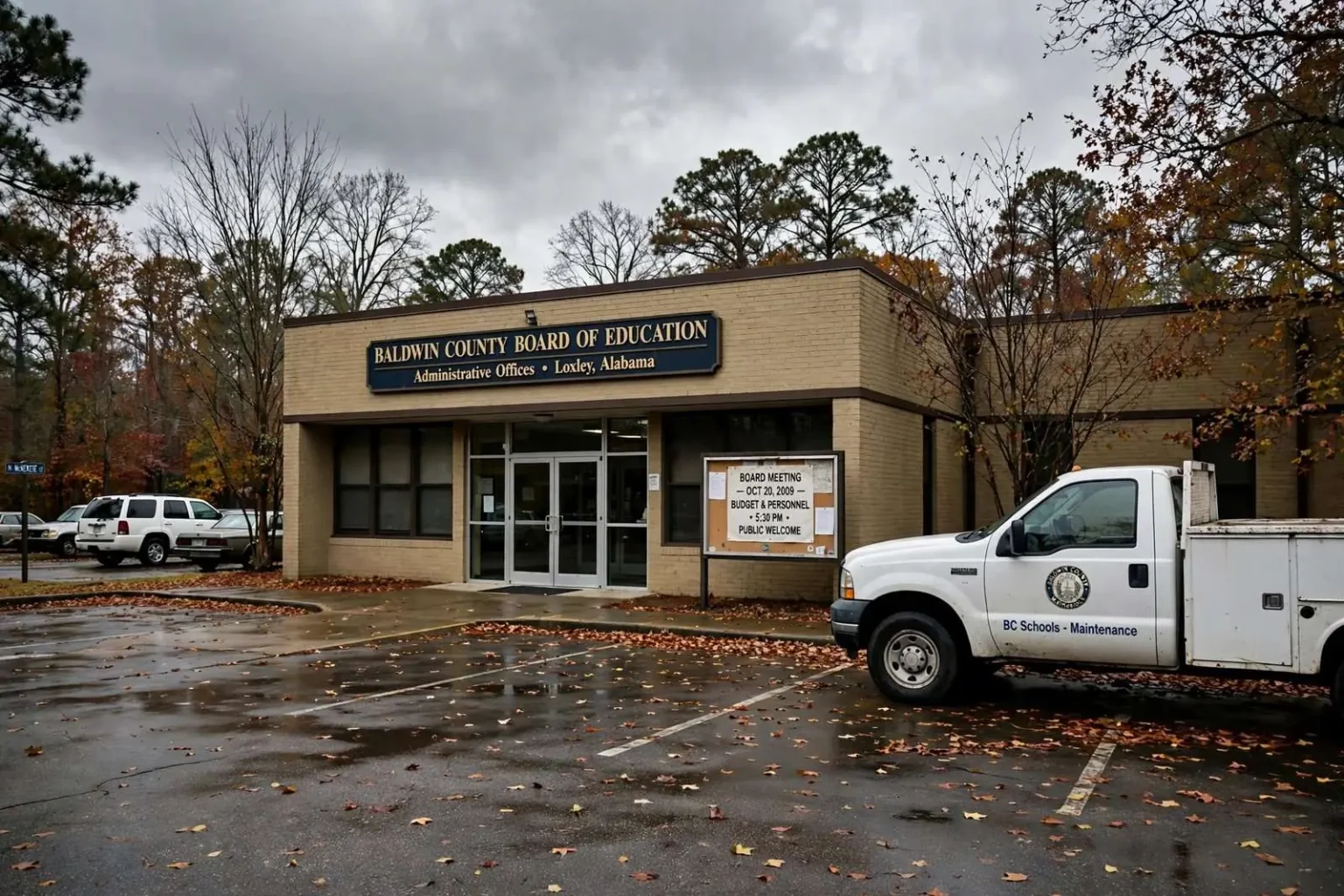
The Baldwin County Board of Education planned to eliminate at least 15 more positions in October 2009 as it responded to a multimillion-dollar budget shortfall, according to reports at the time. The proposed reductions came just weeks after the system cut more than 200 support positions through its reduction-in-force policy, deepening a round of retrenchment that touched nearly every corner of one of Alabama’s largest public school systems.
Superintendent Faron Hollinger said the next round would affect central-office positions, after the earlier cuts had fallen on classrooms and support services. The plan signaled a shift in where the pain would land: instead of bus aides, custodians and instructional assistants, the jobs in the crosshairs were administrative and supervisory posts at the system’s headquarters in Loxley and its satellite offices across the county.
The budget hole behind the cuts
The shortfall that drove the planning was not unique to Baldwin County. Across Alabama in 2009, the recession was draining the state Education Trust Fund, which relies on income tax and sales tax collections that fell sharply as the economy contracted. The state responded with across-the-board proration — mid-year percentage cuts to the budgets of every school system — leaving local boards with payrolls already committed and less money than expected to meet them. Systems that had grown rapidly during the good years, as Baldwin County had, felt the squeeze from both directions: rising enrollment costs and shrinking state allocations.
Baldwin County’s board, like boards across the state, was legally required to balance its budget, and personnel costs make up the overwhelming majority of any school system’s spending. That arithmetic is what pushed reductions in force to the top of the list of options, even as board members acknowledged the human cost of each round.
Further reductions under discussion
School leaders said they were also considering reductions beyond the payroll — cuts to field trips, extracurricular activities, travel expenses and take-home vehicle privileges. Each of those lines represents a category that a board can trim without touching a contract, but each also reaches directly into the student experience and into the daily operations of the schools. Fewer field trips means fewer hands-on lessons outside the classroom; trims to extracurricular budgets ripple through athletics, band and clubs; travel and vehicle restrictions reach the administrators and support staff who move between campuses across a county that spans a wide geographic area from Spanish Fort and Fairhope to Bay Minette, Foley and Gulf Shores.
Hollinger said continued cuts could threaten the system’s ability to operate normally — a warning that the system was approaching the limits of what could be absorbed without visible effects on schools. The board expected to meet the following week to identify specific positions for elimination, the formal step that turns a planning list into actual reductions.
The reduction-in-force policy
The October planning followed the system’s earlier decision to cut more than 200 support positions through a reduction-in-force policy. Reductions in force — commonly called RIFs — are the formal mechanism by which school boards abolish positions for financial reasons, as distinguished from terminations based on performance. The process typically involves seniority and certification considerations, notice requirements and, in many systems, the right of affected employees to recall if positions are restored. The scale of the Baldwin County action placed it among the larger personnel reductions reported by Alabama systems during the recession years.
Support positions cover a wide range of the workforce that keeps a school system running: instructional aides, clerical staff, custodians, maintenance workers, child nutrition employees and transportation staff, among others. Cuts in those categories affect staffing levels on campuses and on bus routes even when classroom teacher counts remain intact, and they were the first place the Baldwin County board looked when the budget gap emerged.
A system shaped by growth
The crisis was a sharp reversal for a system defined for decades by growth. Baldwin County’s public schools serve a county that stretches from the Mobile Bay shore to the Florida line, taking in communities from Bay Minette in the north to Daphne, Fairhope and Spanish Fort along the bay, and Foley, Robertsdale, Summerdale, Elberta, Gulf Shores and Orange Beach at the southern end. For years leading into the recession, new subdivisions and new schools had been the system’s defining story, with enrollment climbing and campuses opening to keep pace along the U.S. 98 and Alabama 181 corridors.
The recession changed the picture quickly. State allocations tightened, and local revenue — tied to property values and sales activity in a county where real estate is a major industry — weakened alongside them. A system that had been hiring to accommodate growth found itself instead identifying positions to eliminate, first in support services, then in the central office, with more under discussion.
What the October meeting was set to decide
The board’s expected meeting the following week was to identify the specific positions to be eliminated from the central-office ranks. Identifying positions is the step that sets the formal process in motion — notices, effect dates and the reshuffling of duties that follows when administrative jobs disappear. Central-office reductions are often politically easier than classroom cuts, but they shift work onto remaining staff and can slow the administrative functions that support principals and teachers.
By the time the October deliberations began, the question facing the board was less whether to cut than where, and how much more the system could take before operations themselves were affected — the possibility Hollinger raised when he warned that continued reductions could threaten the system’s ability to operate normally.
Field trips, activities and services on the table
The non-personnel items under discussion — field trips, extracurricular activities, travel expenses and take-home vehicle privileges — illustrate how a budget crisis reaches beyond payrolls. Field trip budgets fund the excursions that connect classroom lessons to the world outside school, from Montgomery’s state Capitol and civil rights sites to the coastal science programs available along Mobile Bay. Extracurricular cuts touch band uniforms, athletic supplies, competition travel and the coaching stipends that make after-school programs possible. Travel budgets determine how often administrators and specialists move between campuses, and take-home vehicles affect staff who respond to facilities problems and transportation needs after hours.
Trimming those categories produces savings without abolishing jobs, but it also narrows the margin of services students and families notice most. School leaders weighing the options in October 2009 were effectively choosing which sacrifices would be least visible to the county’s classrooms — a calculation familiar to every Alabama board that navigated the same recession-era squeeze.
The bigger Alabama picture
Baldwin County’s experience in the fall of 2009 was part of a statewide and national pattern. School systems across Alabama spent 2009 and the years that followed absorbing proration orders, spending freezes and successive rounds of personnel cuts as state education revenue fell with the economy. Local boards responded with the same toolkit Baldwin County used: reductions in force, hiring freezes, trims to travel and programs, and appeals for local tax support. The era reshaped staffing and program levels in systems large and small, and its effects on support staffing and central-office capacity lingered well after revenues began to recover.
For Baldwin County, the October 2009 deliberations captured another stage of that crisis — a system that had planned more than 200 support-position cuts weeks earlier now preparing at least 15 more, this time from the central office, with program categories on the table as well.
How to read this account
This report is a historical account of planned actions and discussions as they were reported in October 2009. It documents what the board was considering and what its superintendent said at the time — not final staffing decisions, later budget results or the current operations of Baldwin County public schools. Boards routinely modify, postpone or soften planned reductions as revenues, enrollment and state directives change, and the outcome of these particular deliberations was determined in meetings that followed the ones described here.
The choices every board faced
Baldwin County’s deliberations in October 2009 reflected the position of school boards everywhere that fall: every remaining option carried a cost, and the only question was which cost the community would bear. A board can cut people, cut programs or cut services, and each choice draws immediate response from the families it affects. Personnel cuts preserve programs but remove the staff who deliver day-to-day services; program cuts preserve jobs but narrow what students experience; across-the-board trims spread the pain thin but satisfy no one. The Baldwin County board worked through that calculus in public, week after week, as the shortfall persisted.
What the record does establish is the posture of the system in that moment: a large, growing county school system responding to a multimillion-dollar shortfall with successive rounds of cuts — first support positions, then central-office jobs, then the trips, activities and services that round out a school year — under a superintendent who was telling the public plainly that the system’s ability to operate normally was at stake.