Mobile Couple Faces Dozens of Fraud Charges in Craigslist Electronics Scheme
A Mobile man and woman face a combined 38 fraud-related charges after police say they scammed buyers responding to Craigslist electronics listings.
MOBILE, Alabama — A Mobile man and woman are facing a combined 38 fraud-related charges after Mobile Police say they ran a scheme that lured buyers with Craigslist electronics listings only to hand over household junk instead of the advertised devices.
The man, 34, was arrested Tuesday on 21 counts of fraudulent use of a credit card along with single counts of identity theft, second-degree theft and third-degree theft by deception. At the time of his arrest, he was already out on bail from a separate third-degree theft by deception charge tied to an earlier arrest by Mobile County deputies on Dec. 9. His fiancee, also 34, was arrested on 17 counts of fraudulent use of a credit card in connection with the same investigation, according to a Mobile Police Department spokeswoman.
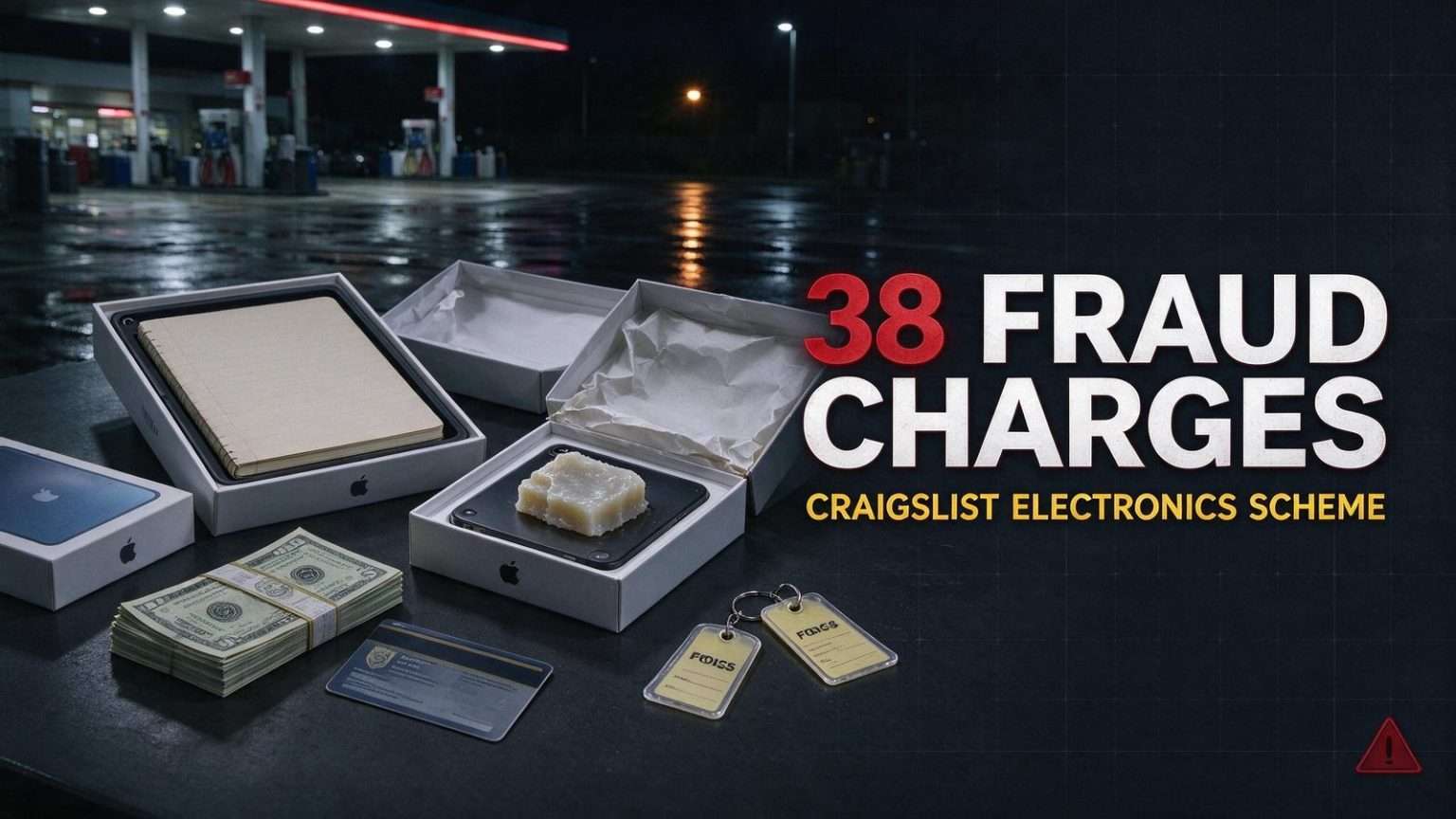
The case first surfaced after a buyer responded to a Craigslist ad for an iPad Mini in late November and arranged to meet the seller at a gas station. According to a deposition filed in court, the buyer paid $300 for what he believed was an iPad Mini and an iPhone 4S. As the buyer began opening the boxes to verify the contents, the seller said he needed to leave for church and departed.
The buyer told investigators he then discovered the iPad box contained only a paper notebook, while a separate complaint filed in court alleges the iPhone box contained melted wax rather than an actual phone. The details, a notebook and hardened wax substituted for devices worth hundreds of dollars, gave investigators a template for what would turn out to be a wider pattern.
Investigators say the case expanded well beyond that single transaction. According to police, the investigation uncovered additional victims who had similarly responded to Craigslist listings for electronics and instead received packaged household items in place of the devices they believed they were purchasing. The repetition of the method, sealed boxes with plausible weight and contents that were not electronics, is what elevated the case from a single complaint to a fraud investigation spanning multiple victims.
How the credit card charges fit in
Separately, police allege a stolen credit card connected to the case was used 21 different times, leading to the arrest of both the man and his fiancee on the fraudulent credit card use charges. Each use of a stolen card constitutes a separate count under Alabama law, which is how a single card generates more than three dozen charges between the two defendants.
The charge structure carries practical consequences. Fraudulent use of a credit card is prosecuted in degrees based on the amounts involved, and a defendant facing 21 separate counts can see exposure accumulate count by count. Prosecutors in cases like this typically use the volume of charges to frame plea negotiations, while defense attorneys focus on which transactions can actually be tied to their client with transaction records and witness testimony.
The identity theft count adds another layer. Using someone else’s card information is not merely a theft of money; it is a misuse of the victim’s identity, and Alabama’s identity theft statute addresses that harm separately. Combined with the theft and theft-by-deception counts, the indictment paints a picture of two complementary schemes: the Craigslist swap operation that took cash from buyers, and the credit card operation that extracted goods and cash from a stolen account.
Mobile Police are asking anyone who believes they may have been targeted by the alleged scheme to contact the department’s main line or its Fourth Precinct office, as investigators continue working to identify additional victims who may not yet have come forward. Fraud investigations often grow this way, with each new victim adding counts, evidence and a clearer picture of the pattern. Victims who assume a small loss is not worth reporting are often exactly the witnesses investigators need to establish that a scheme was systematic rather than isolated.
The wider problem of marketplace fraud
The case underscores a persistent risk tied to online marketplace transactions, where buyers meeting sellers in person for cash deals have limited recourse if a transaction turns out to be fraudulent. Craigslist and similar platforms connect strangers directly, without the payment protection, seller ratings or dispute processes that built-in marketplaces provide. Once a cash handoff is made and the buyer drives away, recovering money or proving what was promised becomes a police matter rather than a customer-service one.
The sealed-box trick at the center of this case illustrates why. A buyer handing over $300 for a sealed iPad box reasonably expects the box to contain the device, and the seller’s hurry, the excuse about needing to leave for church, was designed to prevent the kind of verification that would expose the substitution. Sealed packaging provides no protection when the packaging itself is part of the deception.
Mobile Police have previously urged residents completing online marketplace sales to meet in well-lit public locations, ideally at a police department’s designated exchange zone, and to verify the contents of any package before completing payment. Exchange zones, typically marked parking spaces near a police station or precinct, deter fraud in two ways: they put the transaction under video surveillance, and they make clear to a would-be scammer that the buyer has chosen a location where police presence is constant.
The verification advice matters just as much. Opening a package before payment is not an insult to an honest seller, and honest sellers expect it. A buyer who insists on confirming that the box contains the advertised device before money changes hands removes the exact mechanism this scheme relied on. If a seller refuses verification or rushes to leave, that refusal is itself the warning.
For buyers, the risk calculus has shifted with the growth of online commerce. Meeting a stranger from the internet is now an ordinary activity, and most transactions end without incident. But the household-junk scheme shows how cheap it is for a fraudster to attempt the deception, sealed boxes, a public meeting place, an excuse, and how expensive it can be for the buyer who skips the verification step. The 38 charges now facing the couple reflect the volume of the alleged scheme; the gas station meeting that started the case is a reminder of how it could have been stopped for the price of opening a box first.
What happens next in the case
Both defendants now face the mobile County court system’s normal processing: initial appearances, bond proceedings on the new charges and, eventually, preliminary hearings where prosecutors must show enough evidence to move the cases forward. The man’s pending bail status from the Dec. 9 arrest adds a complication, since courts routinely reconsider bond when a defendant is charged with new offenses while awaiting trial on old ones.
The investigation remains open. Detectives working victim identifications typically match transaction records, phone numbers and Craigslist account information to the contacts they have gathered, and each additional victim strengthens the case narrative. The department’s request for potential victims to come forward through the main line or the Fourth Precinct is a standing invitation that will remain useful throughout the prosecution.
The case also serves the department’s broader public-education effort. Every arrest that becomes public gives officers a concrete story to reference when they repeat their standing advice about exchange zones, daylight meetings and verifying contents before paying. The details of this case, a notebook in an iPad box, wax in an iPhone box, are memorable in a way that generic warnings are not, and that memorability is part of why police departments publicize fraud arrests.
For Mobile residents, the practical takeaways remain unchanged. Meet at a designated exchange zone or another highly visible location. Bring a friend. Count the money privately and inspect the goods fully. Trust the hesitation you feel when a seller pushes to close the deal before you have verified what you are buying. Most marketplace deals proceed exactly as advertised, but the buyers who were victimized in this scheme were not careless people; they were ordinary buyers who handed over sealed boxes and money in good faith. The difference between them and the next shopper is simply whether the box gets opened first.
The volume of the charges also affects how the case moves through the system. With counts spread across two defendants and two distinct schemes, prosecutors may elect to try the matters together or sever them, and the discovery process will involve Craigslist records, phone data and financial statements from multiple victims. Cases built on many small transactions take longer to prepare than single-incident prosecutions, which means a resolution, whether by plea or trial, is likely months away rather than weeks.
The defendants are presumed innocent until convicted, and the charges are allegations the courts will now have to weigh. What is already established is the volume of the response: 38 fraud-related counts, a multi-victim investigation, and a police department using the case to press the precautions that might have prevented it. The gas station meeting that opened the investigation cost one buyer $300; the lesson it left behind costs nothing.