Man Killed in Daylight Shooting at Prichard Gas Station
A man was fatally shot in broad daylight at a Prichard gas station along St. Stephens Road, and investigators are seeking a vehicle of interest.
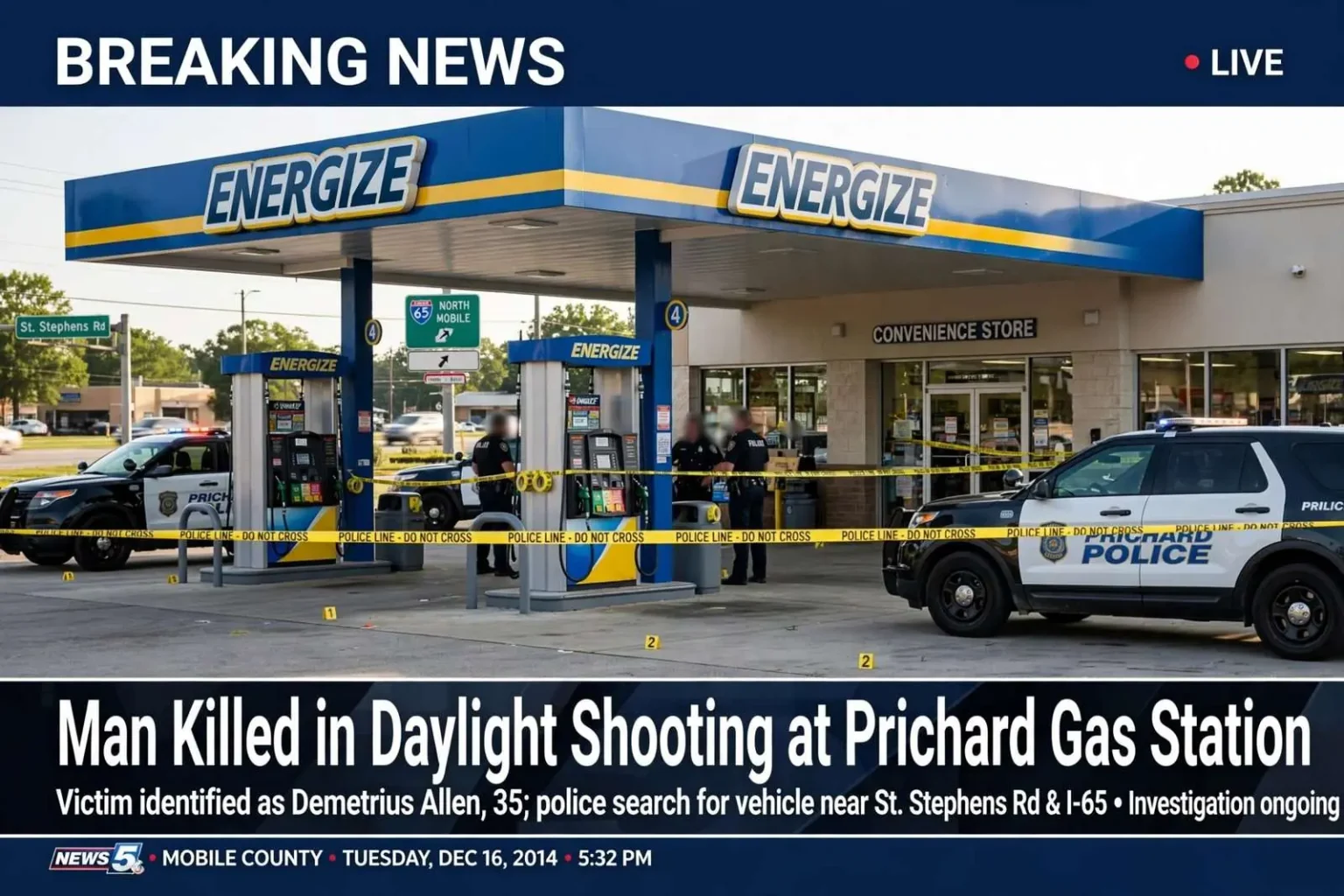
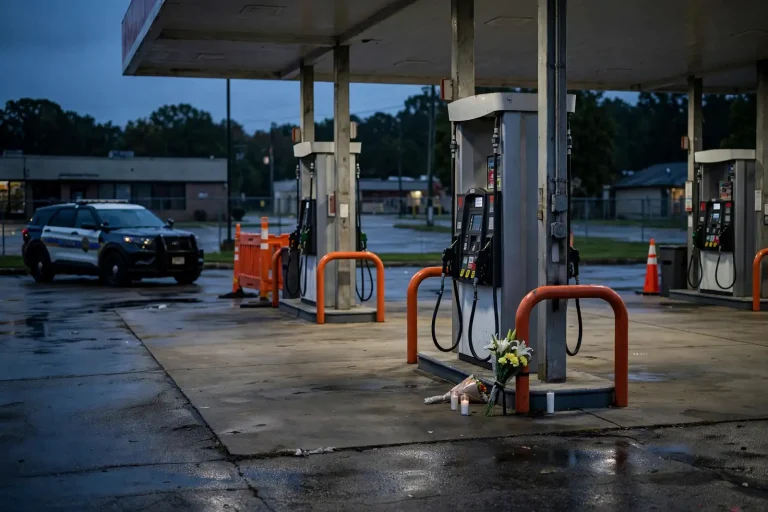
A man is dead after a shooting in broad daylight at a Prichard gas station, according to authorities investigating the incident. The shooting happened around 1 p.m. on a Tuesday afternoon at the Energize Station located on St. Stephens Road near Interstate 65, a stretch of roadway that sees heavy commuter and commercial traffic throughout the day. The midday timing meant the violence unfolded in front of whatever drivers and customers happened to be passing through one of the city’s busiest corridors at lunch hour, and it unfolded in full daylight rather than under the cover of night, adding to concerns among nearby residents and business owners about safety in the area.
A family member identified the victim as Demetrius Allen, who went by the nicknames “Meechie” and “Big Meat” among friends and relatives. Details about a possible motive or the circumstances leading up to the shooting had not been released by investigators as the case remained under investigation. What authorities could say in the hours after the gunfire was limited to the location, the time and the basic outline of what happened — the victim was shot at the station and did not survive, and the people responsible had not been located.
The Response on St. Stephens Road
Prichard police, along with other area law enforcement, responded to the scene and began working to identify potential witnesses and any vehicles that may have been involved in the incident. Investigators canvassed the businesses lining the highway, looking for security cameras that might have captured the moments before and after the shooting. Gas stations along corridors like St. Stephens Road typically operate cameras pointed at the pumps and the store entrances, and footage from those systems often becomes the first meaningful evidence in cases where no one comes forward immediately.
In the hours following the shooting, investigators indicated they were searching for a vehicle possibly connected to the case, a detail authorities hoped would help generate public tips. Releasing even a partial description of a car can turn thousands of commuters into potential witnesses, since a vehicle on a highway corridor is seen by far more eyes than any single suspect. Police asked drivers who had been in the area around the time of the shooting to think back on anything unusual they might have seen and dismissed at the time.
The St. Stephens Road corridor near I-65 has seen previous law enforcement activity, and the shooting added to a string of violent incidents reported in Prichard and the surrounding Mobile County area during the final weeks of 2014. The road, a principal commercial artery that carries local traffic and connects the city’s neighborhoods to the interstate, has long been a focus of patrols for that reason. Its gas stations, convenience stores and strip centers draw a constant turnover of customers throughout the day, which makes the corridor both vital to the city’s economy and difficult to monitor.
The end-of-year timing placed the killing on a list of cases that Mobile County investigators were working to close before the calendar turned. Homicide investigations that begin in December face a familiar set of pressures: witnesses travel for the holidays, memories fade, and cases that go unsolved into the new year tend to grow colder with each passing week. Officials said solving cases like this one often depends heavily on tips from residents who witnessed something out of the ordinary — a car parked too long, an argument in the parking lot, footsteps and headlights at a hour when the station should have been quiet.
A Small City’s Long Struggle
Prichard, a small city bordering Mobile, has periodically pursued revitalization initiatives even as it continues to grapple with public safety challenges common to many small municipalities with limited resources. Once a thriving industrial suburb that drew workers to the shipbuilding and manufacturing jobs of the mid-twentieth century, Prichard has spent decades working against population loss and the erosion of its commercial base. City leaders have tried a succession of redevelopment plans aimed at its main corridors, but a police department with a modest budget can only stretch so far across a city of Prichard’s size, and every high-profile act of violence tests the city’s efforts to persuade businesses and families to stay and invest.
For the people who live and work around St. Stephens Road, the afternoon shooting was the kind of event that lingers. A gas station is one of the few places in any neighborhood where nearly everyone passes through — commuters topping off tanks on the way to I-65, workers buying lunch, students walking home. When gunfire erupts there in the middle of the day, it shatters the assumption that daylight and traffic offer any protection, and it leaves shop owners along the corridor fielding questions from shaken customers for days afterward.
Investigators leaned on that same community in the days that followed. Anyone with information about the shooting or the vehicle investigators were seeking was encouraged to contact Prichard police or Mobile County law enforcement. Detectives stressed that even fragments of information — a partial plate, a direction of travel, a description of someone seen running from the lot — can be the piece that connects a suspect to a scene. In cases without an identified shooter, the public tip line is often the most productive investigative tool available.
The killing also underscored the broader pattern that law enforcement officials across Mobile County describe when they talk about violent crime in the county’s smaller municipalities. A shooting at a busy commercial spot does not stay a Prichard story for long; suspects and witnesses move along the interstate and highway network that ties the county together, and the agencies involved — city police, county sheriff’s deputies, and where appropriate state and federal partners — coordinate across jurisdictional lines to follow the trail.
The investigation into Allen’s death remained active, with officials continuing to appeal to the public for tips that could help identify a suspect. For Allen’s family, the appeal was simple and familiar to anyone who has followed similar cases in the region: someone in the community knows what happened at the Energize Station on that Tuesday afternoon, and the case will move only as fast as what that person is willing to share. Until then, the file remains open, the vehicle sought by investigators remains unfound in public records, and a stretch of St. Stephens Road goes back to its daily traffic, carrying with it one more reminder of how quickly a routine afternoon can turn fatal.
How Daylight Cases Get Solved
Daylight shootings present investigators with a paradox. More people are present to see what happens, but those witnesses are often in motion — behind the wheel, mid-purchase, glancing up from a phone — and the chaos of sudden gunfire scatters them before anyone thinks to take a photograph or write down a plate number. Detectives working cases like this one typically spend their first days reconstructing the scene from surveillance video, phone records and the statements of the people who were closest when the shots were fired. The gas station’s position near the Interstate 65 interchange widens the search further, because a shooter leaving the lot can be on the highway within seconds and headed in almost any direction.
That is why the description of the possible vehicle mattered so much to the investigation. In commercial corridor cases, the car is often the most reliable thread: it had to arrive, park and leave, and every one of those movements was likely captured by at least one camera on the street. Authorities hoped that publicizing the search would prompt commuters who traveled St. Stephens Road that afternoon to review their own dashboards and memories — and perhaps their own recordings — for anything that matched.
The case also fit into a wider conversation that Mobile County officials have repeated for years about the role residents play in clearing violent crimes. Arrests in cases like this one frequently come not from forensic breakthroughs but from a single call from someone in the neighborhood who decides to speak up. Police departments in communities the size of Prichard do not have the staffing to blanket a corridor like St. Stephens Road with investigators indefinitely, and officials have consistently said that the difference between a case that goes cold and one that ends in an arrest is usually a witness who chooses to make the call.
Anyone with information can reach Prichard police directly through their investigative division during business hours, and information can also be passed to Mobile County law enforcement for routing to the detectives assigned to the case. Authorities have not announced a timeline for the investigation, and they have not said whether they consider the shooting a targeted act or a random encounter. What they have said, repeatedly, is that the case will be worked until it is closed, and that the community’s help remains the fastest route to an answer for Allen’s family.