Landmark Mobile Adoption Case Nears Completion After Same-Sex Marriage Ruling
A Mobile mother's yearslong legal fight to adopt her wife's biological son is set to conclude following the U.S. Supreme Court's marriage ruling.
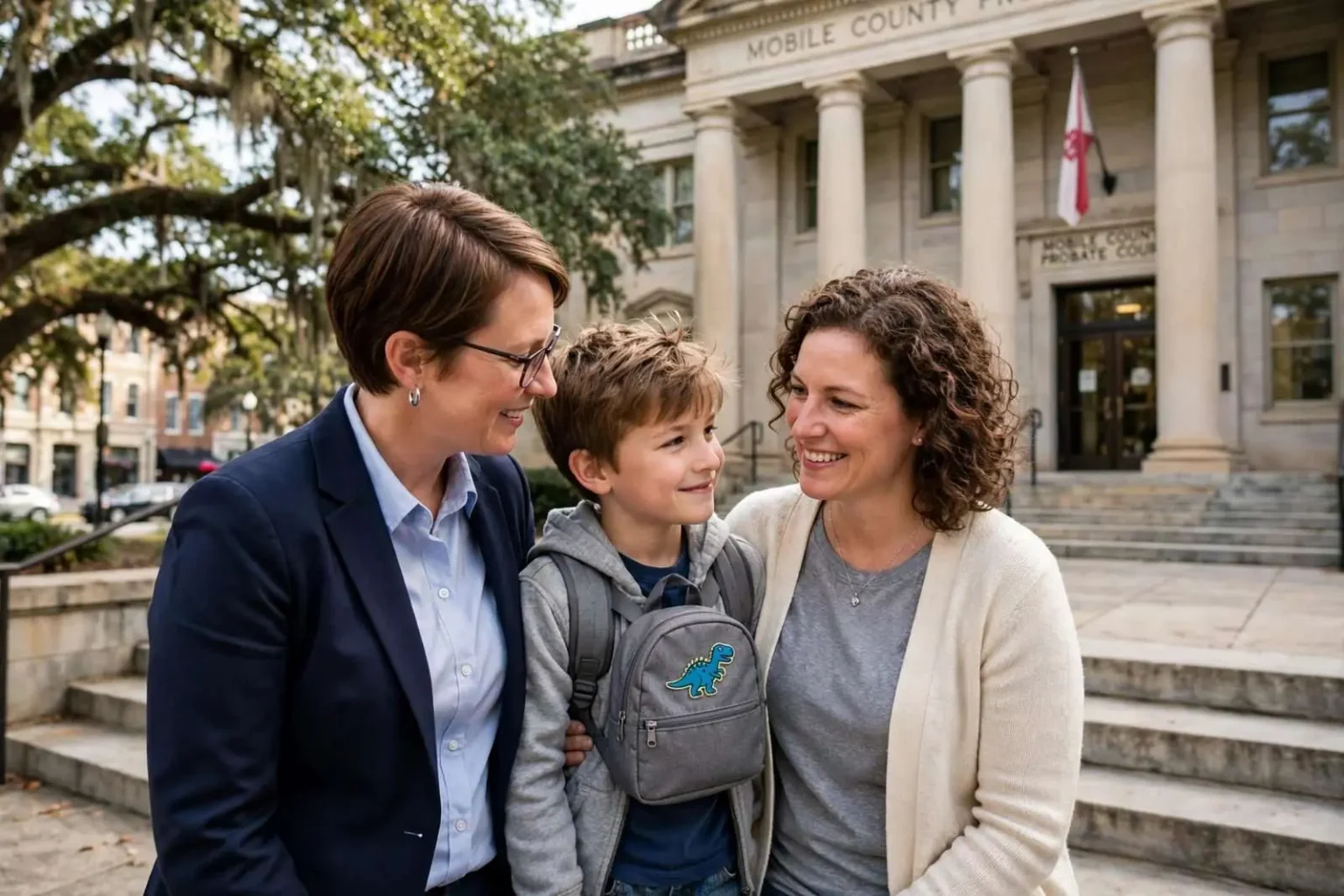
A Mobile County adoption case that helped shape Alabama’s fight over same-sex marriage is nearing its conclusion, with a local mother set to formally become the legal parent of the child she has raised since birth.
Cari Searcy, who led a legal challenge that ultimately helped overturn Alabama’s ban on same-sex marriage, is scheduled to finalize the adoption of her wife’s biological son later this month. The case had been tied up for years in Mobile County Probate Court and later in federal court, as Searcy sought the legal recognition that would give her equal parental rights alongside her wife, Kim McKeand.
For the family, the paperwork at stake is nothing less than the legal architecture of parenthood: the right to authorize medical care, to enroll a child in school, to claim a child in a custody dispute or an emergency, and to stand before the law as a parent with no asterisk. The boy at the center of the case has known Searcy as a mother since his birth; what the adoption finally provides is the legal document to match.
Searcy first filed adoption paperwork in Mobile County Probate Court in 2011. A judge rejected the petition the following year, citing the state’s constitutional ban on same-sex marriage, and the Alabama Court of Civil Appeals later upheld that decision. At every step, the obstacle was not the fitness of the parent but the structure of Alabama family law, which at the time made no room for the spouse of a biological parent in a marriage the state did not recognize.
From probate court to federal court
Searcy’s attorneys eventually took the fight to federal court, where a judge ruled in February that she could not be denied the adoption. The federal ruling landed in the middle of Alabama’s broader marriage conflict — the same winter that saw a federal judge strike down the state’s ban on same-sex marriage and probate offices across the state divide over whether to issue licenses — and it established that the constitutional problems with the state’s position extended beyond the marriage license itself to the parenting rights that flow from it.
The case saw additional delays after Mobile County Probate Judge Don Davis recused himself, citing a separate related lawsuit, leaving the adoption in limbo until a new judge could be appointed to oversee it. The recusal reflected the tangle the marriage fight had created in the probate system: Davis was himself a defendant in litigation over marriage licensing, and he stepped aside from Searcy’s adoption to avoid the appearance of entanglement between his own case and the family’s.
That appointment ultimately came from Alabama Supreme Court Chief Justice Roy Moore, one of the most prominent opponents of same-sex marriage in the country, who named retired Baldwin County Circuit Court Judge James Reid to handle the case in early July. The irony was not lost on anyone following the litigation: the state’s most visible opponent of same-sex marriage was the official whose appointee would sign the final order in one of its landmark family cases.
Moore drew national attention earlier in the year when he directed the state’s probate judges to withhold marriage licenses from same-sex couples just before a federal ruling legalizing such unions was set to take effect. His administrative authority over the judicial system gave him the power to make those assignments, and the Searcy appointment passed through the same office that had spent the year resisting the federal rulings the Searcy case helped produce.
A father in the eyes of the law
Despite his own public opposition to same-sex marriage, Moore’s appointment of Reid cleared the final procedural hurdle standing in the way of Searcy’s adoption. The retired Baldwin County judge took the case without fanfare, and the family’s attorneys scheduled the finalization for later in the month — the moment when a fight that began with a 2011 filing becomes, at last, an ordinary adoption decree.
David Kennedy, an attorney representing the couple, said the case’s resolution carries deep significance for the family. Beyond its meaning for Searcy, McKeand and their son, the outcome sets a precedent that will reach other Alabama families: children being raised by same-sex parents across the state now have a pathway to the legal security that children of married couples take for granted.
How one family’s case reshaped state law
The Searcy case is a study in how constitutional change actually happens — not in a single dramatic ruling but in the accumulation of decisions that make the old order untenable. The 2011 petition seemed unremarkable when it was filed: two parents, married where they could, asking a probate judge to recognize what their household already knew. Its rejection forced the question of whether Alabama could hold children’s legal security hostage to its definition of marriage, and the courts ultimately answered no.
By the time the federal judge ruled in February that Searcy could not be denied the adoption, the legal landscape was shifting around the family. The U.S. Supreme Court had agreed to hear the marriage cases nationally, the state’s probate offices were in open conflict over licensing, and Alabama’s position — that a parent’s relationship to the child she was raising simply did not exist — was becoming harder to defend with each ruling.
When the U.S. Supreme Court decided in June that same-sex couples nationwide have a constitutional right to marry, the remaining obstacles to cases like Searcy’s collapsed. Probate judges who had been ordered to withhold licenses could no longer do so, and the state’s highest court was left to reconcile its earlier directives with superior federal authority. The adoption finalized this month stands on that sequence of events, one of the practical fruits of the marriage ruling that extends far beyond wedding ceremonies.
What the case means for other Alabama families
The significance for Alabama’s same-sex parent families is concrete. Before the Searcy litigation, a non-biological parent in the state had effectively no route to a co-parent adoption, no matter how long the couple had been together or how fully they shared the work of raising a child. The consequences fell on children in every ordinary crisis of life — a medical emergency in another state, a parent’s death, a family breakup — where the legal relationship decides who may act and who is left without standing.
The federal ruling in Searcy’s case removed that barrier, and probate courts around Alabama now process adoptions by married same-sex spouses under the same standards applied to any other stepparent petition. Family law attorneys across the state have pointed to the case as the turning point, and its name now appears in briefs and bar discussions as the case that broke open second-parent adoption in Alabama.
The family’s own journey is the human measure of the change. Four years elapsed between the first filing in downtown Mobile and the finalization scheduled this month — four years of a child growing up in a family the state declined to legally recognize, and of parents who refused to accept that answer. The adoption hearing will be brief, administrative, almost mundane. That mundanity is the point, and it is what the family fought for.
Mobile County at the center once more
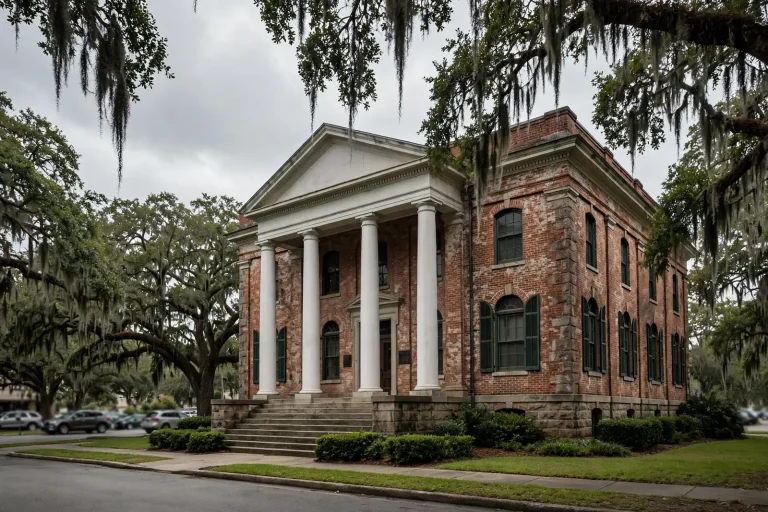
It is fitting that the case closes where it began. Mobile County’s probate court has been the stage for nearly every chapter of Alabama’s same-sex marriage conflict — the rejected 2011 petition, the federal case that followed, Judge Davis’s recusal amid the licensing litigation, and the license office that closed to all couples during the standoff. The county’s families bore the weight of the conflict’s practical consequences even as its courtrooms produced the rulings that ended it.
Chief Justice Moore’s role in the final chapter — assigning Judge Reid to the case that concluded the fight his own orders had prolonged — closes the story with a certain historical symmetry. The case began when Alabama law had no place for Searcy as a parent and ends under a finalization order issued by a judge appointed by the state’s leading opponent of the change that made the adoption possible.
Later this month, the family will stand in a Mobile courtroom, and the judge will enter an order finding what the household has known since the boy’s birth: that the boy being adopted has two parents. The certificate will be filed in the same probate system that once refused the petition, and the case that began as a rejection letter will end as a lesson in how Alabama law learned to see the families that were already there.
The family has declined to celebrate publicly before the order is signed, but their attorneys say the finalization will close one of the longest-running chapters of the state’s marriage litigation — and open the door for other families who have been waiting to file the same paperwork without fear of the answer.