Citronelle Man Charged With Kidnapping, Rape After Cemetery Attack
A Citronelle man faces rape and kidnapping charges after police say he handcuffed a woman and assaulted her at a local cemetery.
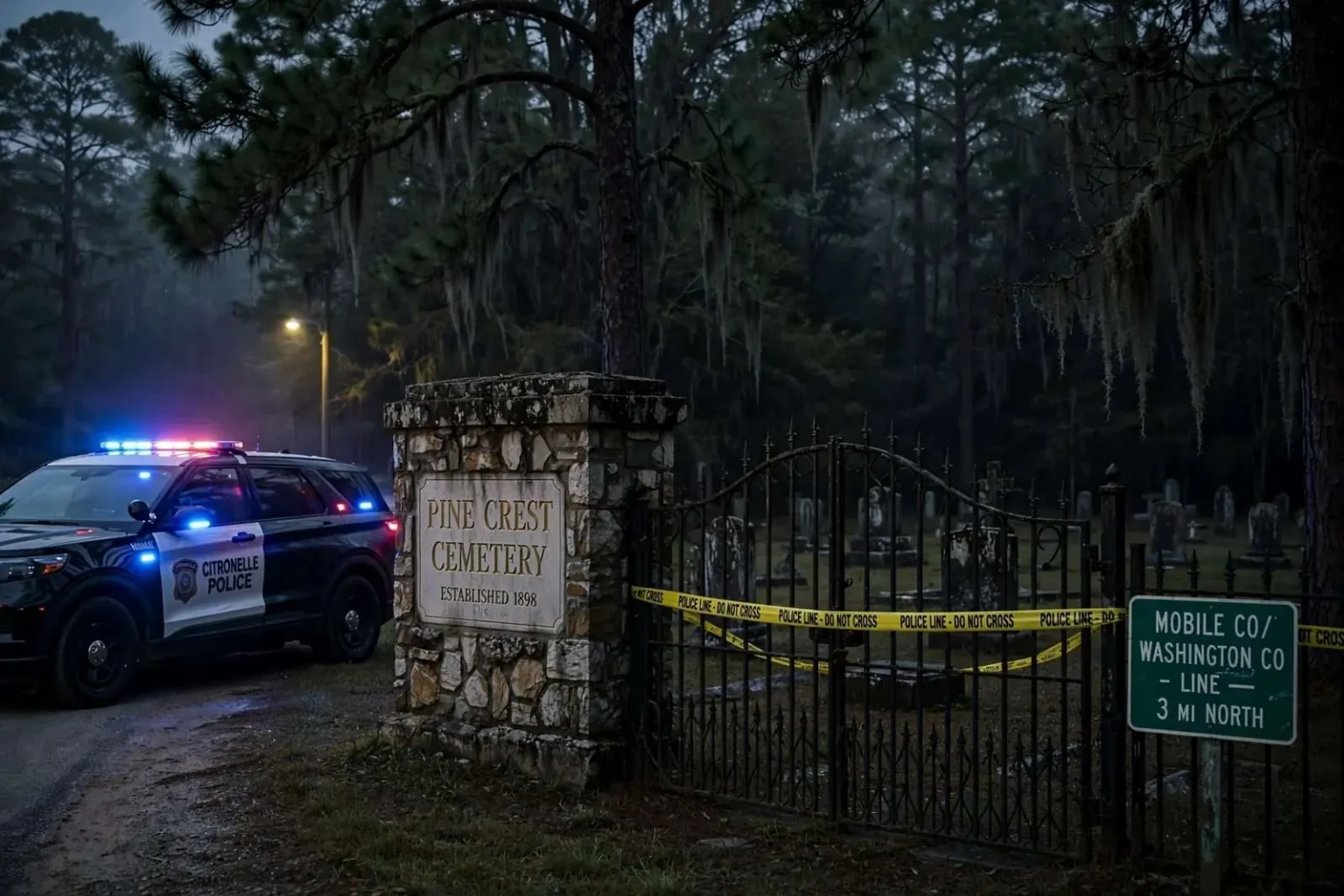
A Citronelle man is facing first-degree rape and first-degree kidnapping charges after police say he handcuffed a woman he knew and drove her to a local cemetery, where he assaulted her. Citronelle police arrested 51-year-old Kenneth Lee Burt last week in connection with an incident reported to authorities on Dec. 31. According to court records, the woman told investigators she considered Burt a friend and that he had stopped by her home for a beer on Dec. 30. She said Burt later asked her to drive his truck to see if she could maneuver it out of her driveway without causing damage. Once she got into the vehicle, the woman told police, Burt forced her toward the center console and attempted to sexually assault her. She said she fought him off, but he was able to move her into the passenger seat, where he restrained her with a set of handcuffs.
According to a detective’s account included in court filings, Burt then drove until he realized he had crossed into neighboring Washington County, at which point he turned back toward Citronelle. Investigators say he eventually parked at Pine Crest Cemetery, where the assault occurred. Court records show Burt has denied involvement in the assault and has refused to provide a DNA sample requested by investigators. Citronelle police did not respond to requests for comment on the case.
The geography described in the filings traces the route of a small-town nightmare. Citronelle sits in the far northern reaches of Mobile County, a city of roughly 3,900 residents surrounded by timberland, and the county line with Washington County lies only a few miles to the north. The detail that Burt allegedly drove until he realized he had crossed into Washington County indicates an extended drive through rural darkness, on roads where another vehicle or a passing driver may have been the only potential witness. That the drive ended back in Citronelle, at Pine Crest Cemetery, placed the alleged assault at one of the community’s most quiet and isolated locations after dark.
The account the woman gave investigators describes an ordeal that began inside her own driveway and unfolded over a period of hours. Her statement that Burt was a friend who had visited her home the evening before, and that she got behind the wheel only to help him move his truck, illustrates the pattern prosecutors describe in many acquaintance sexual assault cases: the suspect is someone the victim had no reason to fear, and the circumstances that placed her in danger began as ordinary neighborly help. First-degree kidnapping charges in Alabama apply when a person is abducted and restrained, and the alleged use of handcuffs to restrain the woman in the vehicle’s passenger seat is the conduct those charges are designed to reach.
The Allegations and the Court Record
Court records show Burt has denied involvement in the assault and has refused to provide a DNA sample requested by investigators. A suspect’s refusal to consent to a DNA sample is a matter of constitutional protection rather than guilt, and investigators who believe such evidence is material must seek a court order to compel it. In sexual assault prosecutions, DNA evidence is frequently central to the state’s case, and the dispute over the sample in this case foreshadows a legal fight that will play out in pretrial motions before Mobile County District Court Judge Jay York, before whom Burt was scheduled to appear for an arraignment this week.
The Dec. 31 report brought the case to Citronelle police just as the new year began, and the arrest followed within days. Citronelle’s police department is a small municipal force responsible for a city that functions as the commercial center of northern Mobile County, and cases of this severity are typically handled with support from county and state resources. Investigators worked from the woman’s account, the detective’s sworn narrative filed with the court, and whatever physical evidence the truck and the cemetery scene yielded. The department’s decision not to respond to media requests for comment is consistent with the posture small departments take while a case is pending, when public statements could complicate the prosecution.
Records show this is not Burt’s first brush with serious criminal allegations. In 1993, Baldwin County investigators arrested him on charges that included first-degree rape, though that case was later dropped, according to court records. In 2001, he faced additional charges in Baldwin County, including first-degree sexual abuse; that case was ultimately resolved with Burt pleading down to a harassment charge. Both of the earlier cases arose across Mobile Bay in Baldwin County, the state’s fastest-growing county, where court dockets in the 1990s and 2000s handled thousands of felony filings a year. The prior charges will be weighed by prosecutors and, if the case reaches trial, examined under Alabama’s rules for admitting evidence of prior conduct.
How the Case Will Proceed
Burt was scheduled to appear before Mobile County District Court Judge Jay York for an arraignment this week. In Alabama’s system, felony cases begin in district court, where an arraignment formally presents the charges, and then proceed to a preliminary hearing or directly to a grand jury indictment that moves the case to Mobile County Circuit Court for trial. The two charges Burt faces — first-degree rape and first-degree kidnapping — are Class A felonies under Alabama law, the state’s most serious category short of capital offenses, each carrying a potential sentence of decades in prison upon conviction.
The case remains under investigation, and additional details are expected to emerge as the prosecution moves forward. The Mobile County District Attorney’s Office will evaluate the evidence assembled by Citronelle police, including the woman’s account, the detective’s filings and the results of any forensic work the investigation produces. Prosecutors handling sexual assault cases in Mobile County work with victim advocates who support survivors through the reporting, investigation and trial process, and the woman’s cooperation will remain central to how the case unfolds.
The victim’s identity has not been released, consistent with standard practice in sexual assault cases. Alabama, like most states, withholds the names of sexual assault victims from public records and press coverage, a policy rooted in both privacy law and the recognition that confidentiality is often what allows survivors to come forward. The woman’s account, filed through her investigators and preserved in the court record, will now carry the case forward as Burt’s defense prepares to contest the charges in court.
A Small Community Confronts a Serious Case
For Citronelle, a case of this gravity lands heavily on a small community. The city sits more than 30 miles north of downtown Mobile, separated from the city by miles of pine forest and farmland, and residents there are accustomed to policing measured in traffic stops, property crimes and the occasional burglary report. A kidnapping and rape allegation involving a 51-year-old resident and a woman he knew, playing out at the local cemetery, becomes the subject of conversation at every counter and church in town. The intensity is magnified in communities of this size because the people involved are known to their neighbors, and the court record’s details circulate quickly even when officials decline to comment.
The location alleged in the filings — Pine Crest Cemetery — gives the case an added weight in a community where cemeteries are family places, visited on Sundays and tended by the descendants of the people buried there. The allegation that an assault occurred at a burial ground in the resident’s own hometown resonates differently than a crime at an anonymous location, and it is the kind of detail that shapes how a community talks about a case long before a jury hears it.
The alleged drive across the Washington County line also illustrates a practical reality of rural law enforcement in southern Alabama. Citronelle’s position at the corner of Mobile County means a short drive in almost any direction crosses into Washington County to the north or beyond, and jurisdictional questions arise whenever a route crosses a county line. In this case, the detective’s account indicates the alleged assault itself occurred back in Mobile County, keeping the prosecution in Mobile County’s courts, but the route described shows how quickly a crime that begins in one county can touch another before it ends.
The case now moves at the pace of the court system. The arraignment before Judge York marks the formal start, with bond considerations, defense motions and scheduling to follow. Burt’s denial of involvement, filed in the court record, sets up a contested case in which the woman’s account and the detective’s sworn narrative will be tested against the defense’s challenges, and the refusal of a DNA sample signals that the defense intends to litigate the evidence. Whatever the outcome, the allegations themselves — a friend’s visit, a truck in a driveway, handcuffs, a drive through the dark, and an assault at a hometown cemetery — have already left their mark on the northern Mobile County community where they allegedly occurred, and the legal process that begins this week will determine what the record ultimately says about them.