GulfQuest Maritime Museum Gives Mobile a Sneak Peek Before Opening
Mobile's GulfQuest National Maritime Museum opened its doors for a holiday preview reception, giving guests an early look ahead of its public debut.
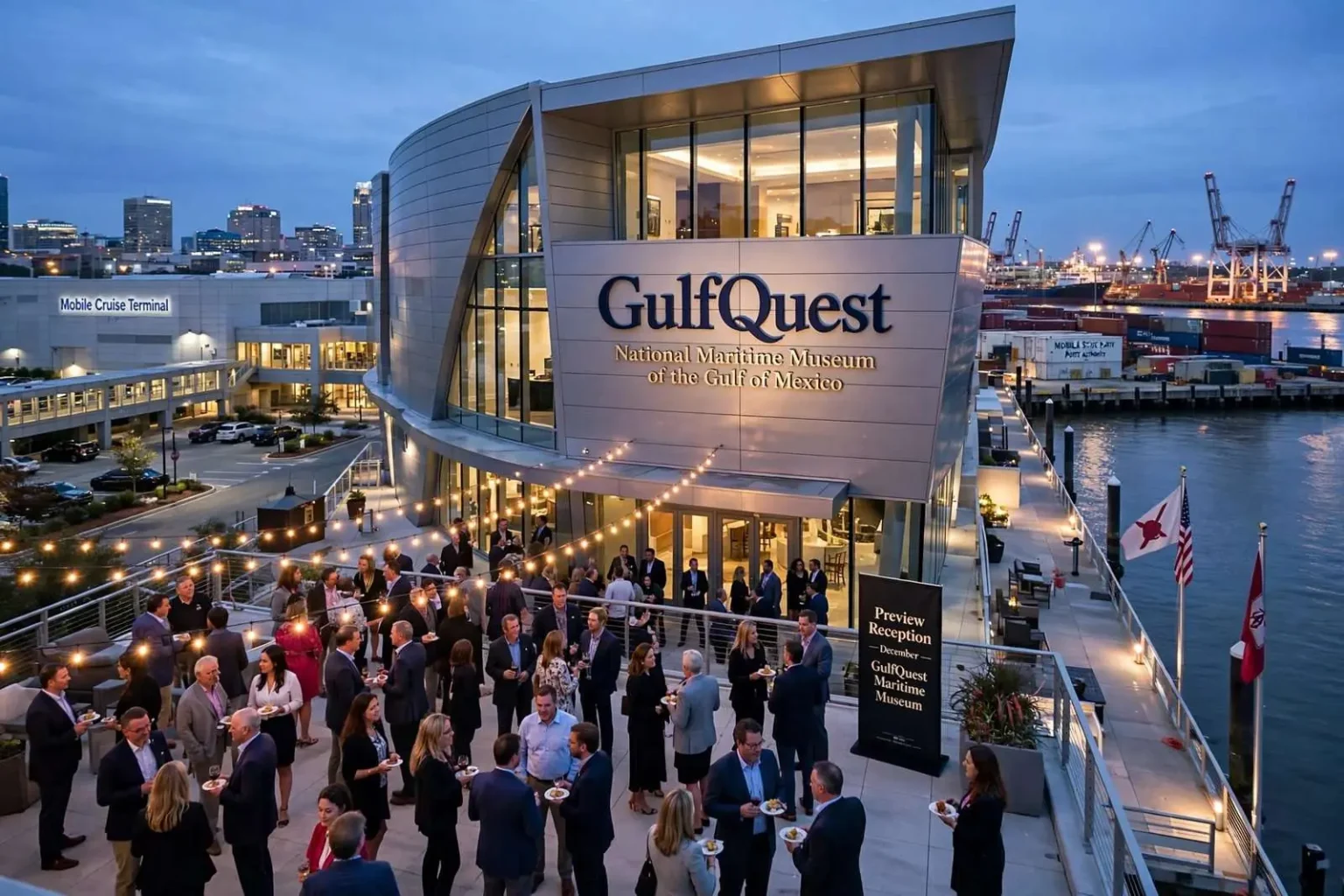
Mobile’s long-anticipated GulfQuest National Maritime Museum of the Gulf of Mexico opened its doors for a preview reception this month, giving several hundred guests an early look at the waterfront attraction ahead of its still-unscheduled public debut. For a project that has been discussed, planned and debated for well over a decade, the reception marked the first time most Mobilians got past the construction fencing and into the building that has been rising on the riverfront.
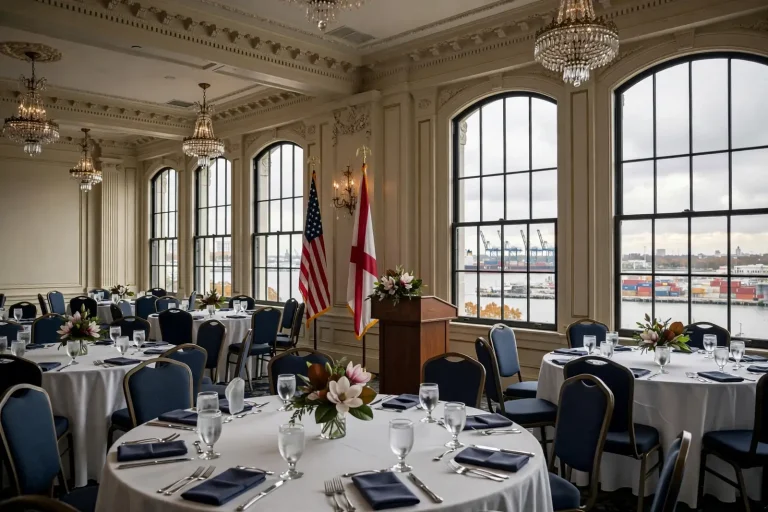
About 500 people turned out for a holiday reception hosted by the Alabama State Port Authority inside the museum, taking in sweeping views of downtown Mobile and the Mobile River from second-floor gallery windows. Guests parked next door at the Mobile Cruise Terminal and moved through upstairs corridors lined with buffet tables and drink stations during the evening event, an easy walk that underscored how the museum, the terminal and the working river all sit within steps of one another downtown.
Only a small portion of the first-floor exhibit space was open for the event, but it offered a preview of the interactive displays, slideshows and videos planned throughout the museum. Organizers say the finished attraction will echo the hands-on style of the Dauphin Island Sea Lab, the marine science education center whose estuarium has long been a favorite school field trip destination for students across south Alabama. Where the Sea Lab focuses on the living ecosystems of the barrier islands and Mobile Bay, GulfQuest is built to tell the broader story of the Gulf of Mexico itself: its shipping, shipbuilding, fisheries, hurricanes and the people whose livelihoods have always depended on the water.
From plan to construction
City officials first floated plans for the maritime museum back in 2000, and construction finally broke ground in April 2009 after years of planning and fundraising. The gap between the idea and the groundbreaking reflected the scale of what was being attempted: a national-caliber maritime museum on a scale few cities of Mobile’s size have tried, financed through a mix of public money and private fundraising.
The building itself, funded by the city of Mobile, has carried an estimated price tag between $45 million and $55 million, with the museum’s overall project cost, including exhibits, running closer to $62 million. Those figures place GulfQuest among the largest single cultural investments in the city’s history, and the expense has made the project a recurring subject of public discussion as the opening date slipped past earlier targets.
The project has moved forward as a public-private partnership between the city and GulfQuest’s nonprofit arm, which has helped raise money for exhibits and will eventually operate the museum day to day. The arrangement puts the nonprofit in charge of admissions, programming and the ongoing fundraising that any museum of this size requires, while the city retains its stake in the building that anchors the riverfront site.
The partnership model has become a common one for major attractions across the Gulf Coast, where municipal governments often fund construction and shell buildings while nonprofit boards raise exhibit money and run operations. For Mobile, the approach spreads the risk and keeps the museum’s day-to-day decisions in the hands of an organization built around its mission rather than a city department, though it also means the nonprofit will carry the responsibility of making attendance numbers justify the investment.
The museum’s location is no accident. It sits on the Mobile River waterfront, beside the Alabama State Port Authority’s docks and the cruise terminal that hosts the ships sailing from the city each year. The Port Authority’s role as host of the preview reception reflected that relationship: the port is at once a neighbor, a partner and one of the main subjects of the story the museum will tell. Generations of Mobilians have made their living from the river and the bay, in shipbuilding, stevedoring, fishing and maritime trade, and GulfQuest is designed to put that heritage on display for visitors who may never have set foot on a working dock.
The fundraising history is worth remembering when the price tag comes up. Between the first discussions in 2000 and the groundbreaking in 2009, the project survived changes in city administration, economic downturns and the long rebuilding period that followed Hurricane Katrina across the Gulf Coast, and the museum’s backers repeatedly had to make the case that a city of Mobile’s size could support a national institution. The current target of roughly $62 million all-in represents both the ambition of the original plan and the compromises made along the way.
Supporters of the project point out that the investment should be measured against what the riverfront site contributes to downtown as a whole. The museum anchors the southern end of the downtown waterfront, ties together the cruise terminal and the port’s public-facing story, and gives the city a weatherproof attraction alongside its outdoor festivals. Critics have questioned the timeline and the cost, but few have argued that Mobile, one of the nation’s historic seaports, lacked the story to fill a maritime museum.
What visitors can expect
When the full exhibit floor opens, visitors will find the kind of interactive, technology-driven displays that have reshaped museums across the country in recent decades. The preview offered a taste of the format through slideshows and videos, but organizers describe a hands-on experience in the mold of the Dauphin Island Sea Lab, where touch tanks and walk-through exhibits do more teaching than glass cases ever could. The museum’s exhibits are planned to cover the natural and human history of the Gulf of Mexico, from storm science and navigation to the seafood industry that defines coastal cuisine across the region.
An opening date still ahead
Museum organizers say they are now targeting an opening sometime in the spring, with early March floated as a possible target date, though no firm date had been set as of the preview event. The caution reflects years of pushed-back timelines, and organizers appear determined to announce a date only when they are certain the exhibits are ready. In the meantime, finishing work on the exhibit floor continues behind the scenes.
When it does open, GulfQuest is expected to become a signature downtown Mobile attraction, drawing on the region’s maritime history and its ongoing ties to the Alabama State Port Authority and the working waterfront along the Mobile River. City leaders have long hoped the museum would join the cruise terminal and the city’s historic districts as anchors of a downtown that draws visitors year-round rather than only during festival season, and tourism officials see a national maritime museum as the kind of destination that can hold families in town for a full weekend.
The potential payoff extends beyond ticket sales. Downtown attractions of this scale tend to feed nearby restaurants, hotels and shops, and they give conventions another reason to choose Mobile over competing Gulf Coast cities. A museum that celebrates the port also gives the city a way to explain itself to visitors, since the reason Mobile exists at all is the deepwater river that made it one of the South’s great seaports.
There is also an educational stake. GulfQuest has been pitched from the start as a teaching institution, the kind of place where students can study navigation, weather and marine commerce in a single visit, and area educators have watched the project with an eye toward field trips that complement the Sea Lab’s programs on the island. A downtown location reachable by school bus from across the county, and the state, could make the museum a routine stop for classrooms in a way the beach-side estuarium never could.
For the nonprofit board that will run the museum, the work between now and opening is largely about exhibit installation and staffing, the unglamorous steps that separate an empty shell from a working attraction. Fundraising for exhibits has been the partnership’s central challenge since the building was completed, and board members have spent years converting pledges into the interactive displays that will fill the first floor.
Residents who missed the reception will have their own chance soon enough. Once the doors open, admission will put the full exhibit floor, the gallery views and the riverfront setting within reach of anyone who has driven past the construction site for years wondering what was taking shape behind the fences. Judging by the turnout and the mood at the preview, plenty of Mobilians are already planning the visit.
The preview reception gave the city a first taste of what those years of planning and tens of millions of dollars will deliver. Guests who walked the second-floor galleries looked out over the same river the museum is built to celebrate, and for the several hundred who attended, the message of the evening was clear: the building is real, the vision is intact, and the opening of one of the Gulf Coast’s most ambitious cultural projects is now a matter of months rather than years.