West Beach Residents in Gulf Shores Are Chipping In to Thank the First Responders Who Serve Their Neighborhood
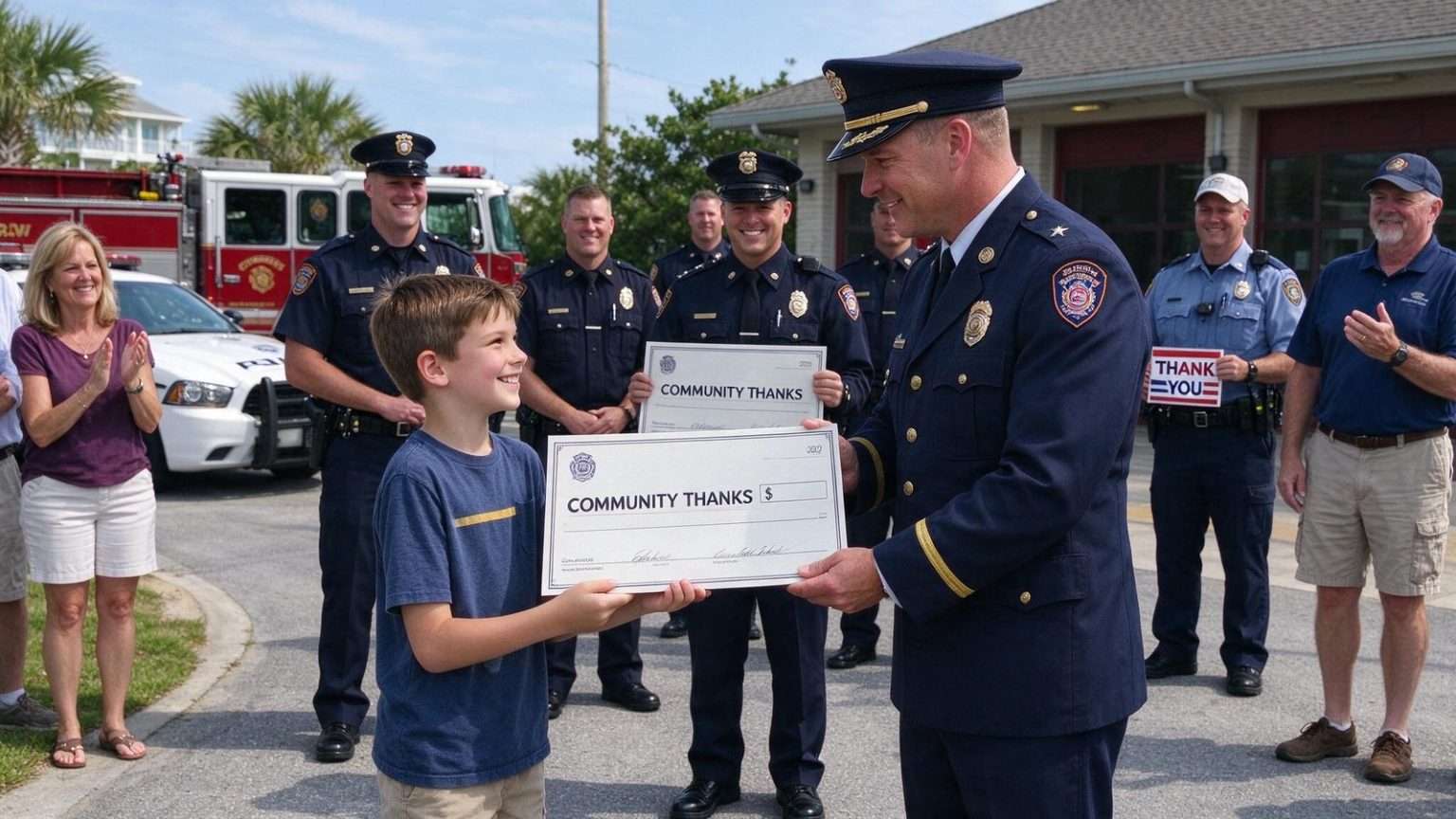
The West Beach Property Owners Association made its annual donations to the Gulf Shores Fire Rescue Association and Police Department, presented this summer by 8-year-old CJ Jenkins.
Residents of Gulf Shores’ West Beach neighborhood have organized a donation effort to support local first responders, a gesture organizers describe as a way of directly thanking the police, fire and emergency medical personnel who serve the coastal community. The effort reflects a relationship that runs deeper than the typical exchange between a neighborhood and the agencies that protect it: along the Alabama beach communities, first responders work a shoreline where the population can multiply several times over in the summer months, and the residents who live there year-round see that burden up close.
A neighborhood tradition of appreciation
Neighborhood-driven appreciation efforts for first responders have become increasingly common along the Alabama Gulf Coast, where tourist-season demands can put extra strain on local police, fire and EMS staffing compared with less densely populated inland communities. Gulf Shores’ population swells dramatically each summer as visitors fill the condos, vacation homes and rental houses that line the beach, and every one of those visitors draws on the same police, fire and emergency medical resources that serve the year-round residents. A traffic accident on Beach Boulevard or a medical call at a crowded public beach requires the same crews whether the city has 10,000 people in it or ten times that number, and the summer months stretch those crews accordingly.
West Beach, a residential area within Gulf Shores, draws both year-round residents and seasonal visitors, adding to the workload for the department’s first responders during peak season. The neighborhood runs along the Gulf-front and canal-side streets west of the city’s main public beach areas, a mix of permanent homes and rental properties that places its residents alongside a steady rotation of vacationers. Neighbors there see the fire station’s calls rise with the temperature, and they see the police presence that summer traffic demands — one reason appreciation efforts like this one have taken root in the area.
It is against that backdrop that the West Beach Property Owners Association built its donation tradition. Rather than a one-time gesture, the association has made supporting the city’s first responders an annual practice, a way of converting neighborhood goodwill into tangible support for the programs the agencies run for the community.
How the gift was carried out
New details have since come to light about how the donation was carried out. The West Beach Property Owners Association, which represents the neighborhood along West Beach Boulevard west of Lagoon Pass, made its annual gift earlier this summer to both the Gulf Shores Fire Rescue Association and the Gulf Shores Police Department. The association presented one check to each agency, continuing a practice it has maintained over multiple years as part of its neighborhood calendar.
Eight-year-old CJ Jenkins presented the checks on the association’s behalf, handing one to Fire Chief Mark Sealy and another to representatives of the police department. Involving a child in the presentation put a face on the neighborhood’s gratitude — a reminder that the people the agencies serve include the youngest residents of West Beach, and that the tradition of appreciation is being passed to the next generation rather than simply maintained by the current one. Presentations like this one have become a staple of the association’s relationship with the departments, giving agency leadership a direct moment of contact with the neighborhood they protect.
Fire Chief Mark Sealy leads Gulf Shores Fire Rescue, the department responsible for fire suppression, beach-area response and emergency medical service across the city, including the West Beach district west of Lagoon Pass. The Gulf Shores Fire Rescue Association, the recipient of one of the checks, supports the department’s charitable and community programs, supplementing what municipal funding covers. On the law enforcement side, the Gulf Shores Police Department handles everything from beach traffic control to residential patrols, with its summer workload expanding alongside the city’s visitor population.
What the money supports
The association says the yearly contribution is intended to support charitable programs run by both agencies, continuing a tradition of neighborhood appreciation for the first responders who serve West Beach. Gifts of this kind typically underwrite the community-facing work that budgets rarely stretch to cover — programs for local children, employee recognition and welfare efforts, equipment beyond the standard issue list, and the kinds of community events that let officers and firefighters build relationships with the residents they serve. By directing the money to the agencies’ charitable arms, the association keeps the donation flexible enough to meet whatever need is greatest in a given year.
For the first responders themselves, the gesture carries a value beyond its dollar amount. Departments along the tourist corridors of the Alabama coast operate under conditions that differ sharply from inland agencies of similar size: seasonal population surges, beach rescues and water-related emergencies, traffic volumes that strain road capacity, and the constant turnover of visitors unfamiliar with local conditions. A public expression of thanks from the neighborhoods that live with that rhythm year after year is, for many officers and firefighters, one of the clearest signals that the work is noticed.
The West Beach Property Owners Association’s role illustrates how organized neighborhood groups function along the Gulf Coast. Associations representing beach districts do more than enforce covenants and coordinate maintenance; they act as the collective voice of communities whose interests — public safety, traffic, beach access, storm preparedness — require ongoing contact with city government and city departments. An annual gift to police and fire agencies is one expression of that ongoing relationship, and one that both sides have come to expect as part of the summer season.
The structure of the gift also says something about how the neighborhood sees its first responders. Rather than targeting a single department or a single cause, the association splits its contribution between police and fire, acknowledging that the safety net over West Beach is woven from both. Emergency calls in a beach district do not sort themselves neatly: a vehicle collision on West Beach Boulevard may draw police, firefighters and medics to the same scene, and a water emergency off the sand mobilizes crews from multiple directions. Neighborhood members who have watched those responses unfold see the agencies as a single system, and their giving reflects that view.
The timing of the presentation — earlier this summer, as the visitor season built toward its peak — was fitting as well. It arrived at the moment when the demands on Gulf Shores’ crews are at their height, when officers and firefighters are working the long shifts that the season requires, and when a reminder that the community stands behind them carries the most weight.
First responders in a resort city
The donation effort also highlights the particular demands placed on public safety agencies in a resort economy. Gulf Shores’ fire and police departments must plan staffing around a calendar that has little in common with that of a typical small city: spring break crowds, a summer season that runs from Memorial Day well past Labor Day, festival weekends that draw tens of thousands, and a hurricane season that can transform the entire apparatus of the city into an emergency management operation with little warning. The men and women who work those shifts are, in many cases, the same year-round residents the neighborhood associations know by name.
Along the Alabama Gulf Coast, other beach communities have developed similar traditions of support — civic clubs, property owner groups and businesses that raise money for their local departments or simply show up with food and thanks during the busiest weeks. What distinguishes the West Beach effort is its persistence: an annual gift, presented year after year, rather than a single fundraiser prompted by a particular event. Sustainability of that kind matters to the agencies, which can plan programs around support they know is recurring.
A signal to the wider community
Gifts like the West Beach association’s also serve an example-making function along the coast. When one organized neighborhood puts its appreciation on the record — with a presentation, a photo and a public accounting — other groups take note, and the practice spreads. The growing number of appreciation efforts along the Alabama Gulf Coast suggests that is exactly what has happened: support for first responders has become part of the civic culture of the beach communities, passed between neighborhoods the way the West Beach association passed its checks to the next generation through its young presenter.
For West Beach residents, the checks delivered this summer continued what has become a familiar ritual: the association’s representative — this year, an eight-year-old carrying the neighborhood’s gratitude in two envelopes — handing the city’s firefighters and police officers a tangible token of the community’s thanks. In a city whose population is defined by how much it grows each summer, the gesture is a way for the people who never leave to tell the people who protect them that the work is seen, valued and remembered long after the last visitor has gone home.